Learn the household skills your gran knew by heart, and stop wondering where to even start
Most of us were shown how to replace things. Few of us were ever shown how to make them last. This book shows you how, step by step, the way she did it.
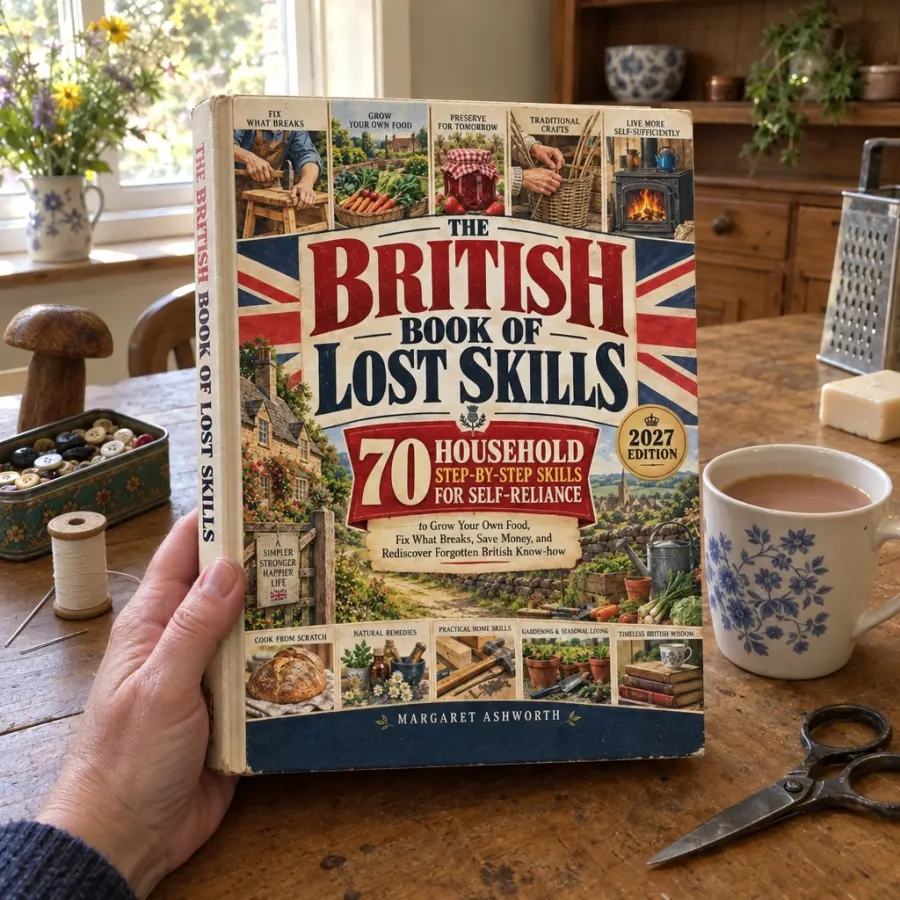

You were never taught. So why does it feel like your fault?
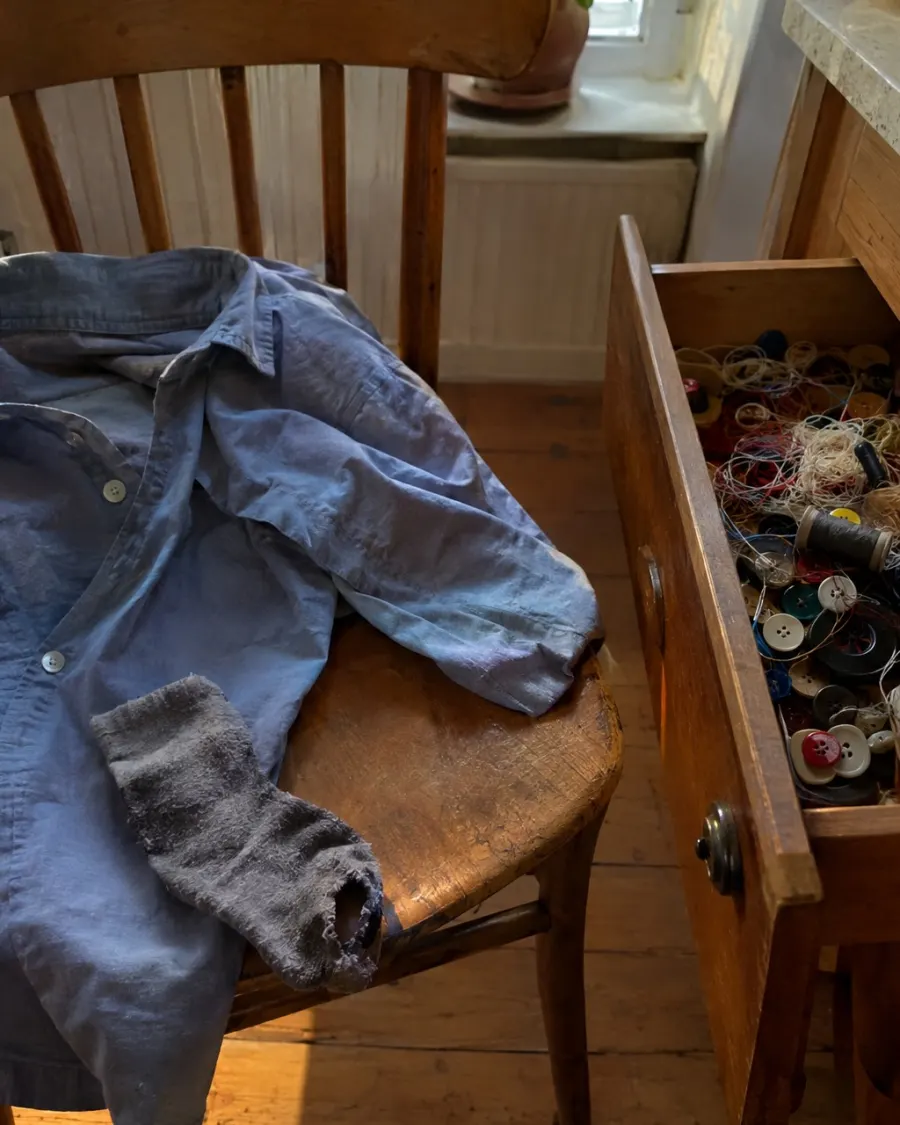
It's a quiet evening. You pull on a favourite sock and your toe finds the hole. Or there's a shirt on the back of a chair, one button short, that has been waiting weeks for someone to deal with it.
You open the drawer. A tin of odd buttons. A needle somewhere. A reel of thread in the wrong colour. You know roughly what should happen next. You just don't know how. So you search online, watch half a clip, miss the one step you needed, and give up. The sock goes in the bin. The shirt goes in the bag for the charity shop.
It looks small. It isn't. Each time, the same thought turns up: everything's disposable now, and I can't even darn a sock. Most of us have no idea how to do even basic repairs. So a perfectly mendable thing is replaced, and then replaced again, while the pile of things to sort out one day grows.
Underneath sits something heavier than the cost of a new pair of socks. It's the quiet feeling that something was handed down and you weren't there to catch it. You remember a pair of hands, a button tin, a darning mushroom, a voice saying 'watch'. And in the small hours the thought arrives: I wish I'd paid attention when she showed me.
If that's familiar, hear this. You are not alone, and it is not your fault. You were never lazy. You were never 'just not the practical type'. Nobody sat most of us down and showed us. You can't learn what nobody ever put in front of you.
So where did all that know-how go? And why is it so hard to find again? The answer is simpler, and kinder, than you might think.
The skills didn't vanish. The showing stopped.
Picture the kitchen of a generation ago. A darning mushroom in the drawer. A jar of buttons on the shelf, each one saved from something that had worn out. Onions hanging in old tights. Soap slivers kept in a dish until there were enough to make a new bar. Nothing was wasted, because nothing was thought of as waste.
None of it was learned in a classroom or from a manual. It travelled the way the best things do: across a kitchen table, hands over hands, one evening at a time. Someone said 'watch', and then 'now you'. That was the whole course.
Then the chain broke. For many of us, school stopped covering practical things. Replacing became easier than repairing, and the disposable took over. When nobody needs to mend, nobody needs to show. One generation stopped passing it on, and the next never saw it done. That's all that happened. Nobody chose to forget, and nobody did you any wrong by not teaching you.
You may have tried to fill the gap. Online clips give you one fragment at a time, and the part you needed is always in the bit you missed. Lists of 'lost skills' often tell you what to do without the how. The big old classics were written for a smallholding, not for an ordinary home. None of them sit beside you and say 'now you'.
And that is the realisation. The skills your gran used every day aren't lost. They skipped a generation. What's missing was never your talent. It was the showing: one skill, one evening, step by step.
So that is what this book puts on paper: her lessons at the kitchen table, in the order she would have given them. It's called The Kitchen-Table Method.
How The Kitchen-Table Method works where lists and clips don't
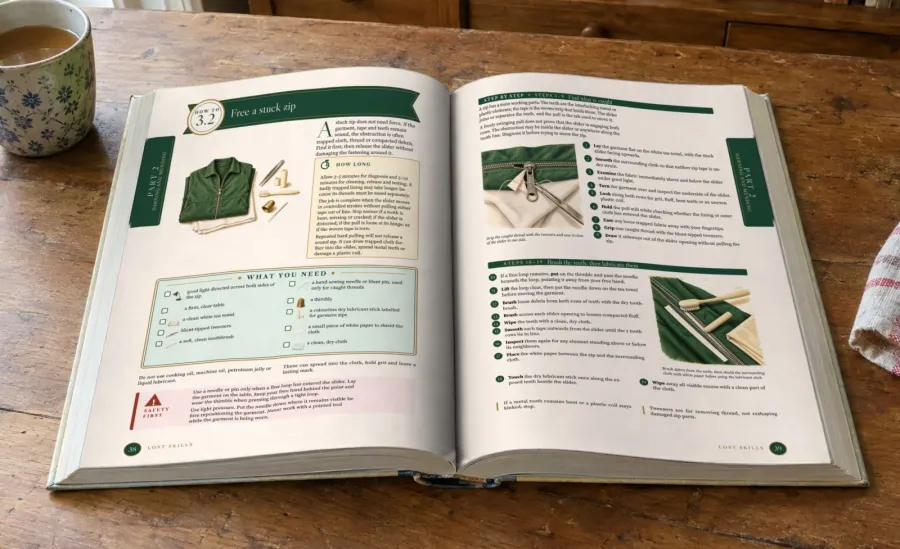
Lists tell you what to do. Clips show you a piece of it. Neither stays beside you while your hands are busy. The Kitchen-Table Method gives every skill the same shape: tools laid out first, small numbered steps, a picture for each stage of the work, and, in most skills, a final check that it worked. You learn one skill at a time, most in a single sitting, then move on.
One skill at a time
Each skill stands alone. You pick one, clear the table and work through it from start to finish, most in a single sitting, so there is no pile of half-learned lessons.
The how, not just the what
Every step says exactly what to do with your hands, and why. Measurements come in metric and imperial, so you never have to convert in the middle of a stitch.
A check at the end of most skills
You don't have to guess whether it worked. Run a fingertip over the darn. Fasten and release the button. Twist the crate. Most skills end with a test you can do yourself.
What you'll find inside
- The simple check that shows whether a worn patch about 2 cm across can be rebuilt before it becomes a bigger hole.
- Why a darn is worked over a mushroom, and why you leave a tail on the inside instead of tying a knot.
- Why a dry soap sliver snaps instead of bending, and how softening the remnants together gives one firm bar that doesn't crumble.
- Which onion goes into the tights and which one stays out: the one that's firm and papery, or the one soft at the neck.
- How old tights keep every bulb apart, let the air move, and let you take one onion without disturbing the rest.
- What 'curing' an onion really means, and how a cured one feels and sounds when you pick it up.
- How to choose a replacement from the button jar: match what it does first, then how it looks.
- The cocktail-stick trick that leaves just enough room beneath a button for the buttonhole fabric.
- The bright-window test that tells you whether a tired sheet is worth turning, or whether to leave it alone.
- Why turning a sheet sides to middle moves the sound cloth into the sleeping area and the wear out to the edges.
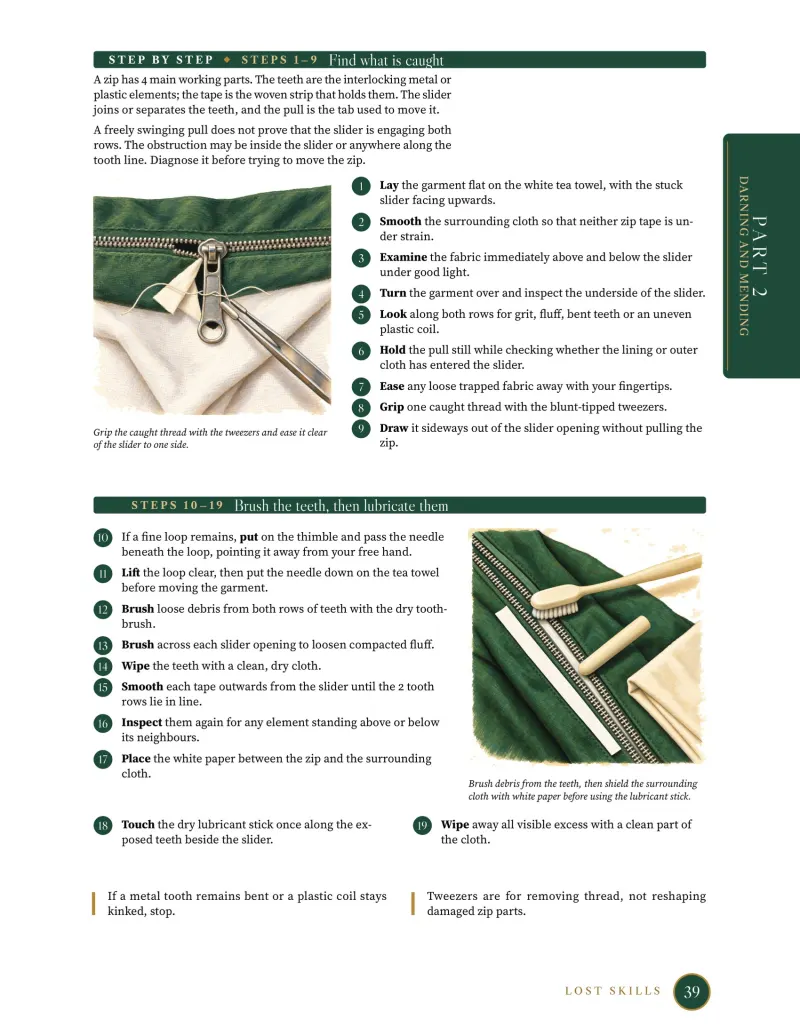
- What a stuck zip is usually hiding (trapped cloth, thread or compacted debris) and why force makes it worse.
- The tiny back-and-forth movement that coaxes a slider free, and the three warning signs that mean stop at once.
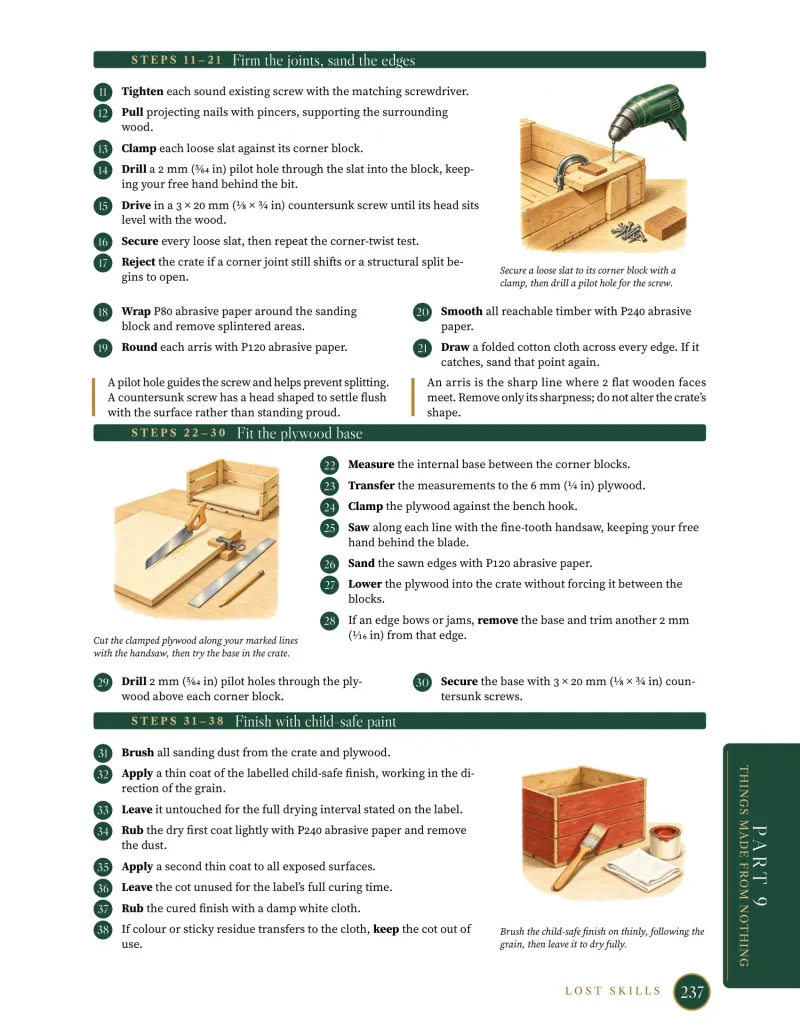
- The corner-twist test that tells you whether an old apple crate is sound before you spend an evening on it.
- The damp white-cloth rub that tells you whether the finish on a doll's cot has fully cured.
- Why 'there's plenty of wool left in it' isn't enough, and how linked seams tell you a jumper can be unravelled.
- The 30 cm test pull that shows whether old yarn is strong enough to knit again, before you've washed a thing.
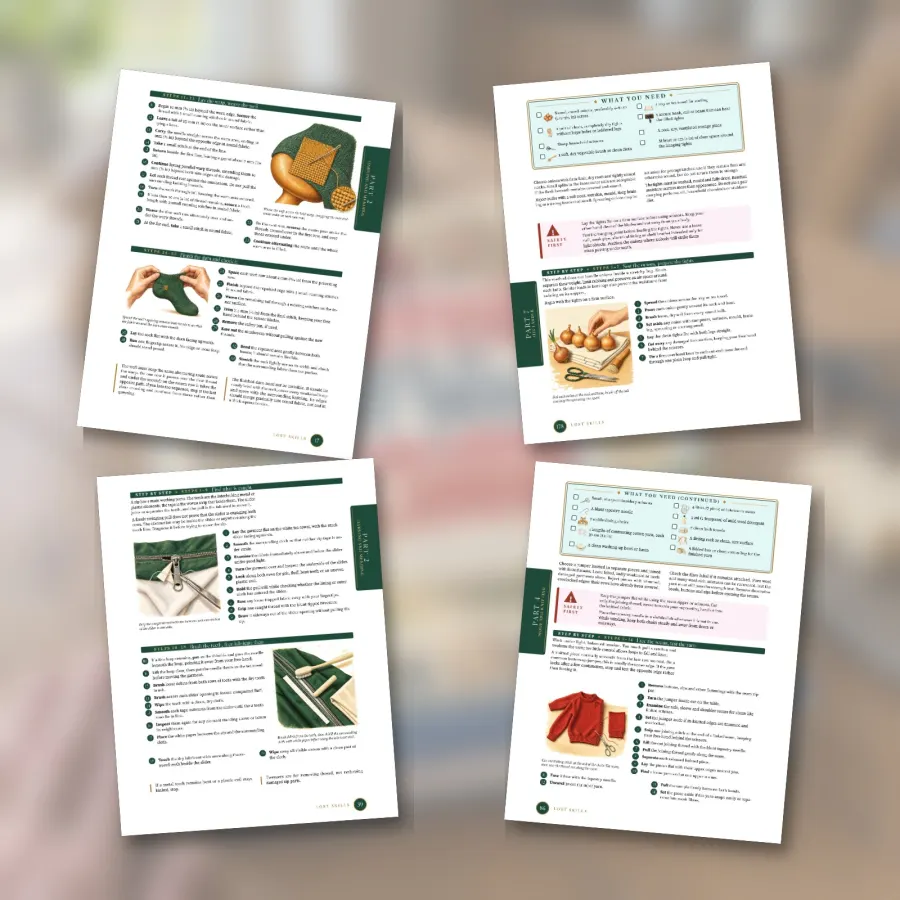
Don't take our word for it: here are some of the real pages, just as they appear in the book.
Look inside: real pages from the book
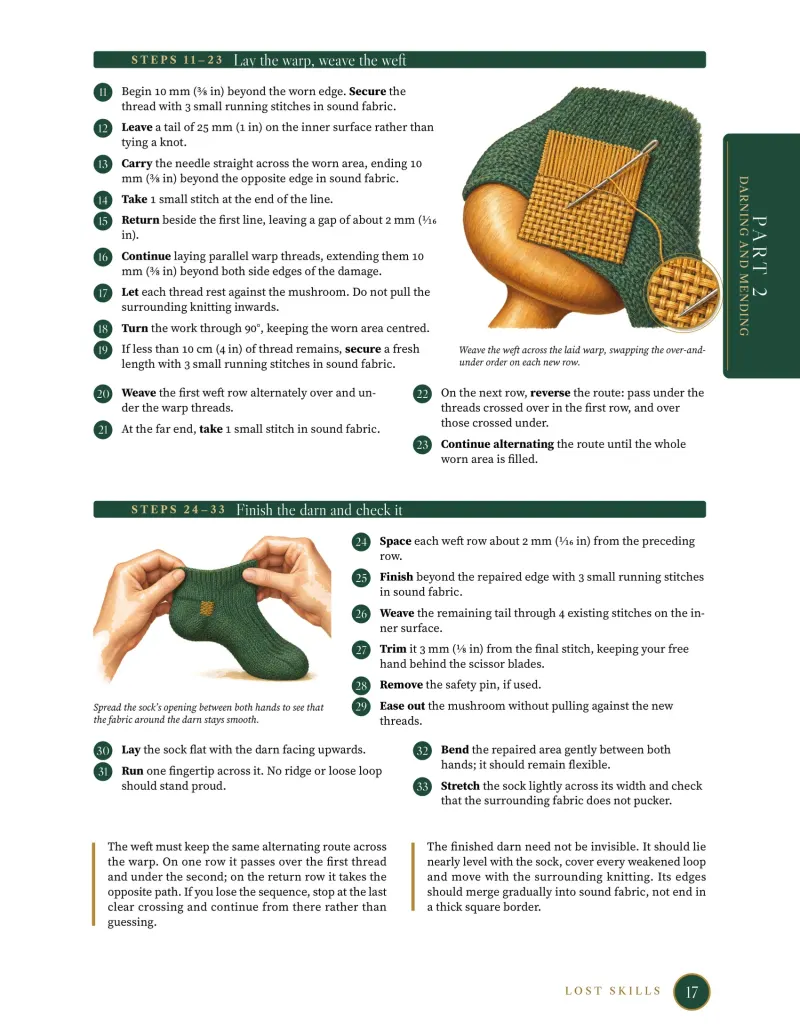
Here are eight of the 70 skills, exactly as the book lays them out. Notice how small each step is, and how every one ends with a way to check your work.
 Inside the book
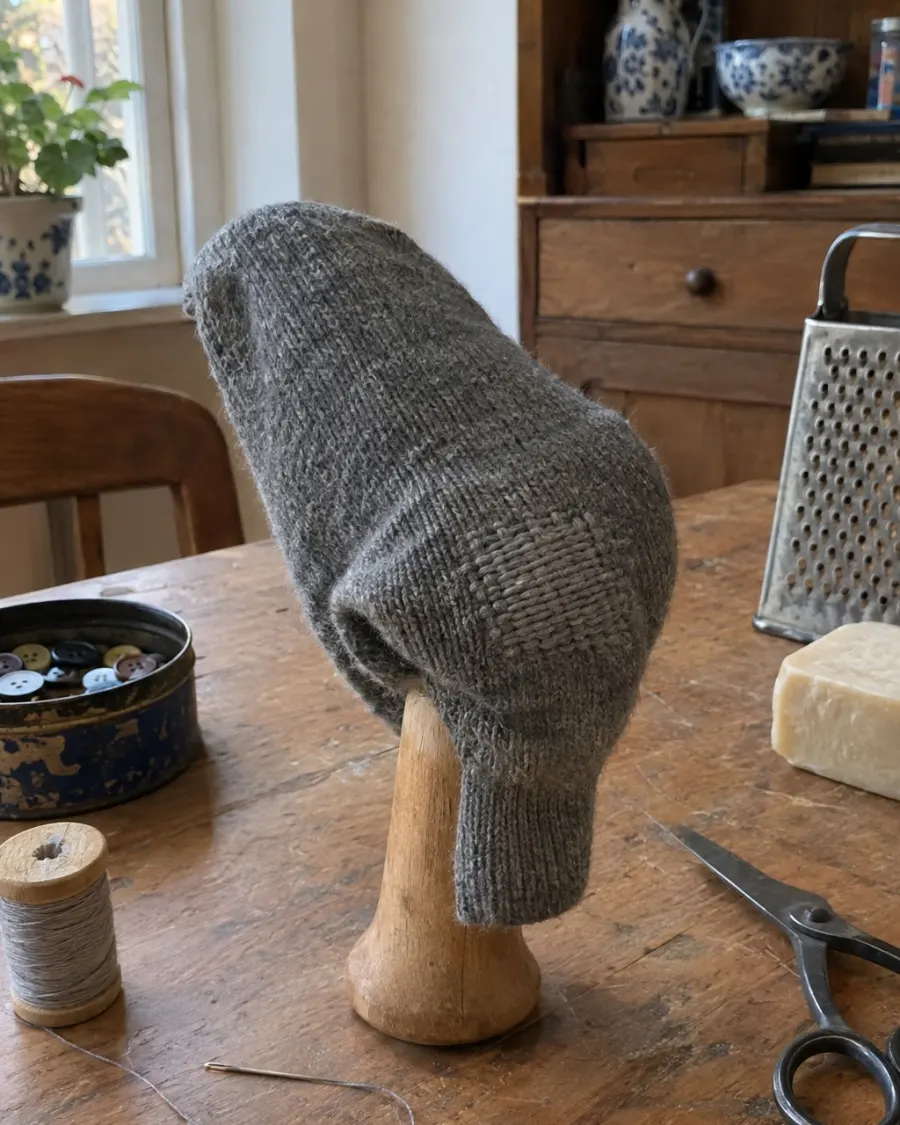 →
→Darn a sock with a darning mushroom
Lay parallel threads over the worn patch, then weave across them, and the hole is rebuilt rather than hidden.
 Inside the book
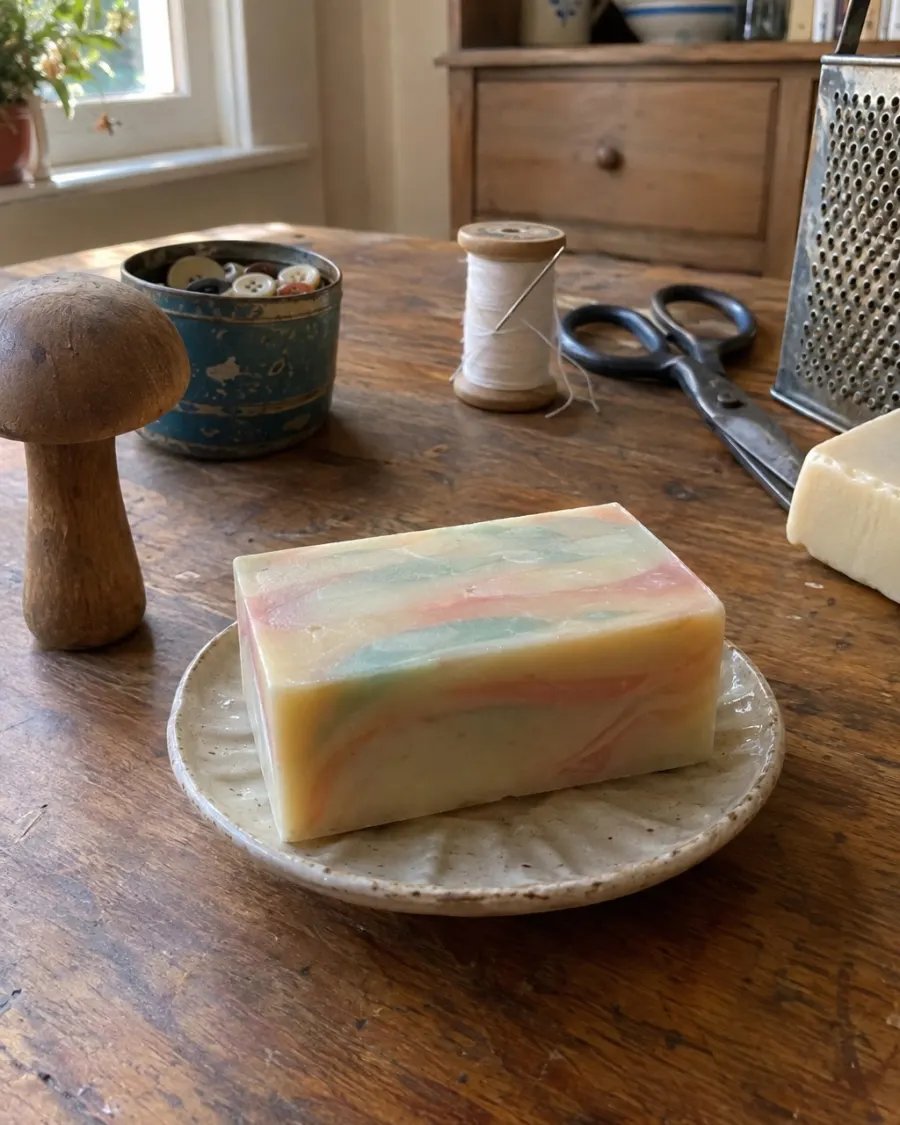 →
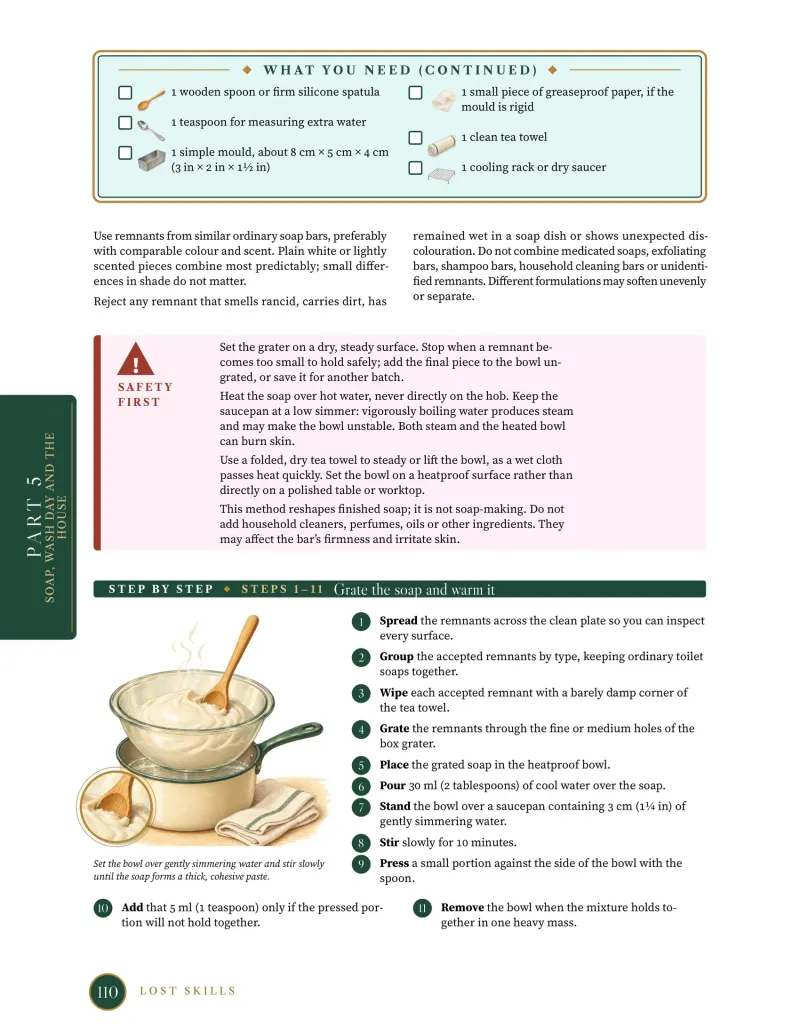
→A new bar from soap slivers
Grate, soften, press into a mould: the scraps you kept dropping in the bin become one firm bar.
 Inside the book
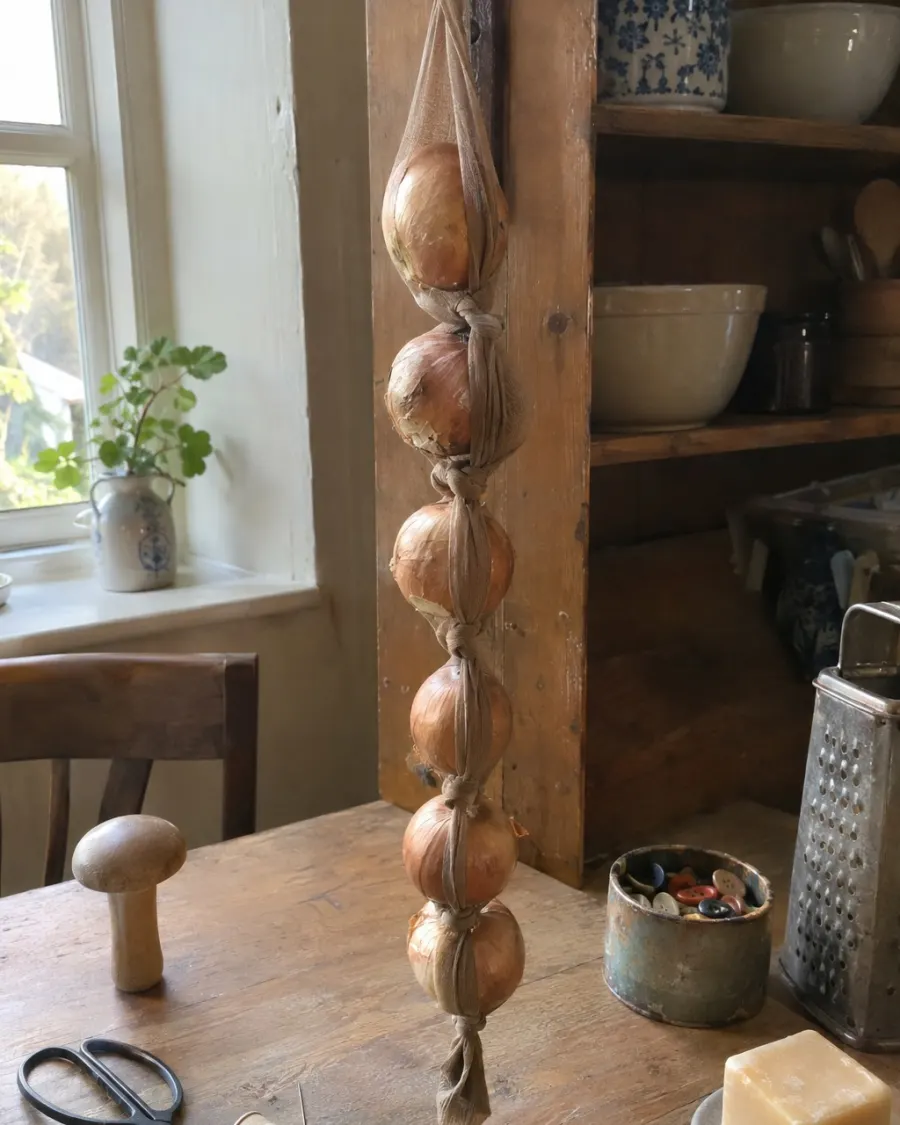 →
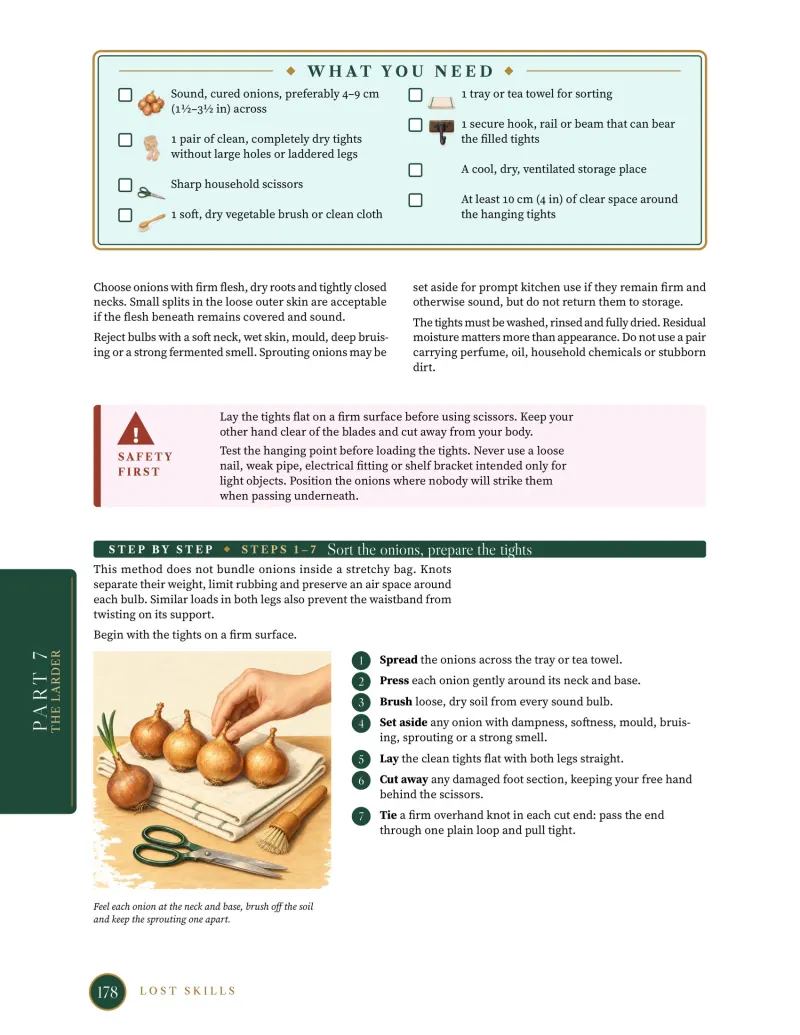
→Hang onions in old tights
A knot between each bulb keeps them apart, so you can cut one free without touching the rest.
 Inside the book
 →
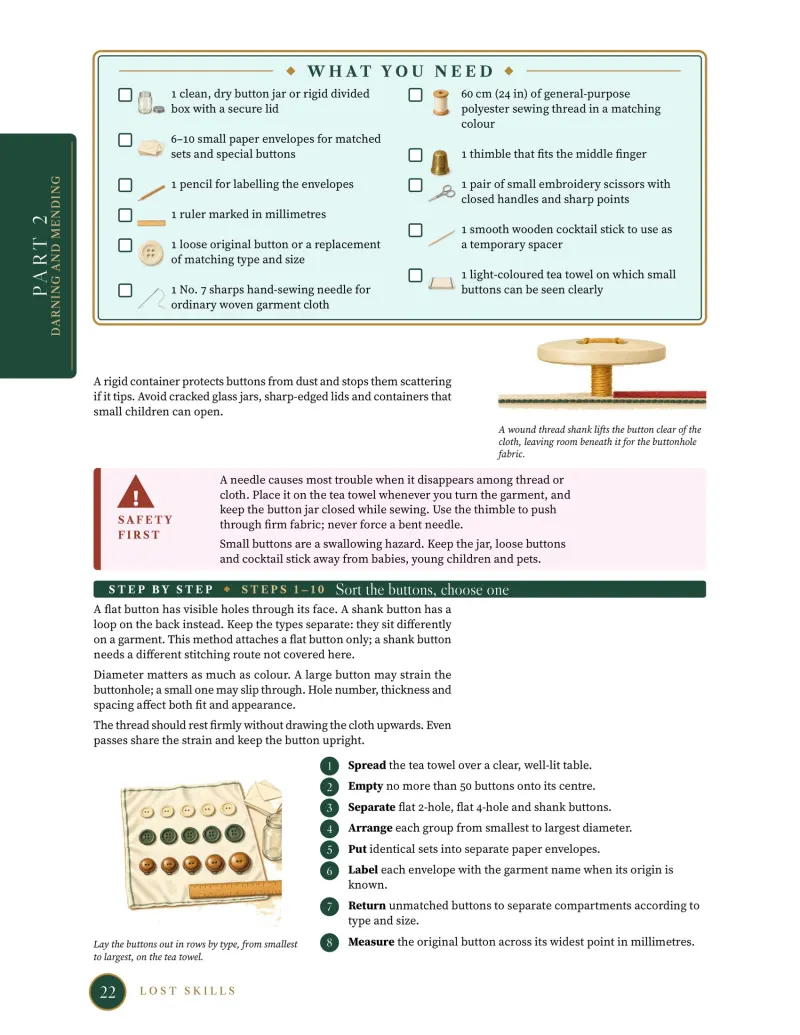
→The button jar: save buttons and sew one on to stay
Match what the button does before how it looks, and leave room beneath it for the cloth.
 Inside the book
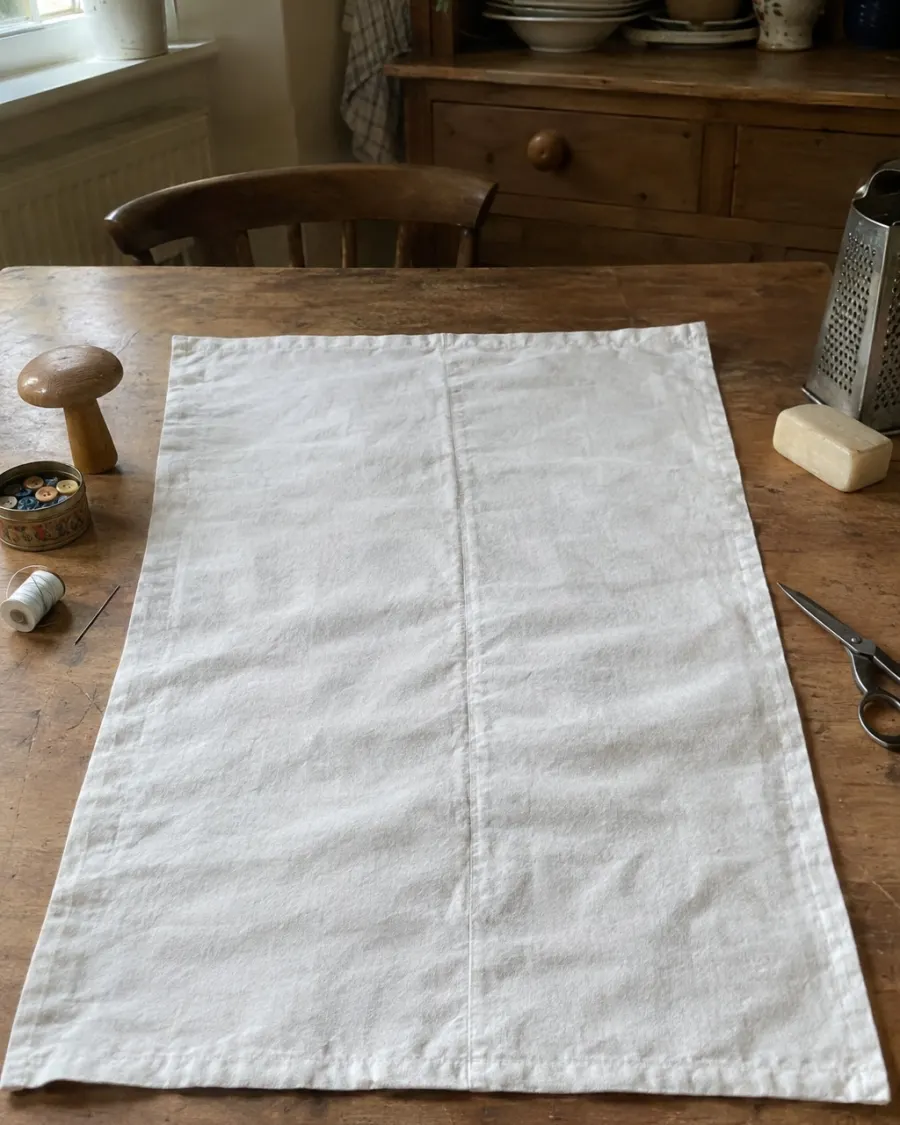 →
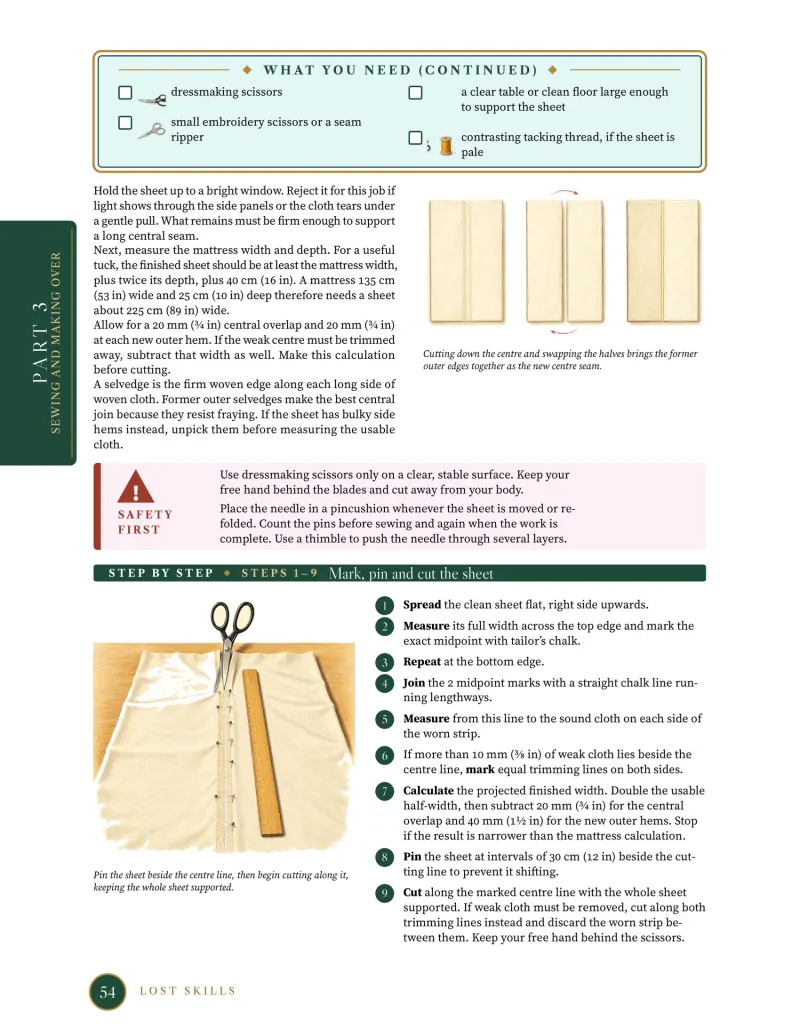
→Turn sheets sides to middle
Cut it lengthways, swap the halves, join them in the centre, and the worn middle moves to the edges.
 Inside the book
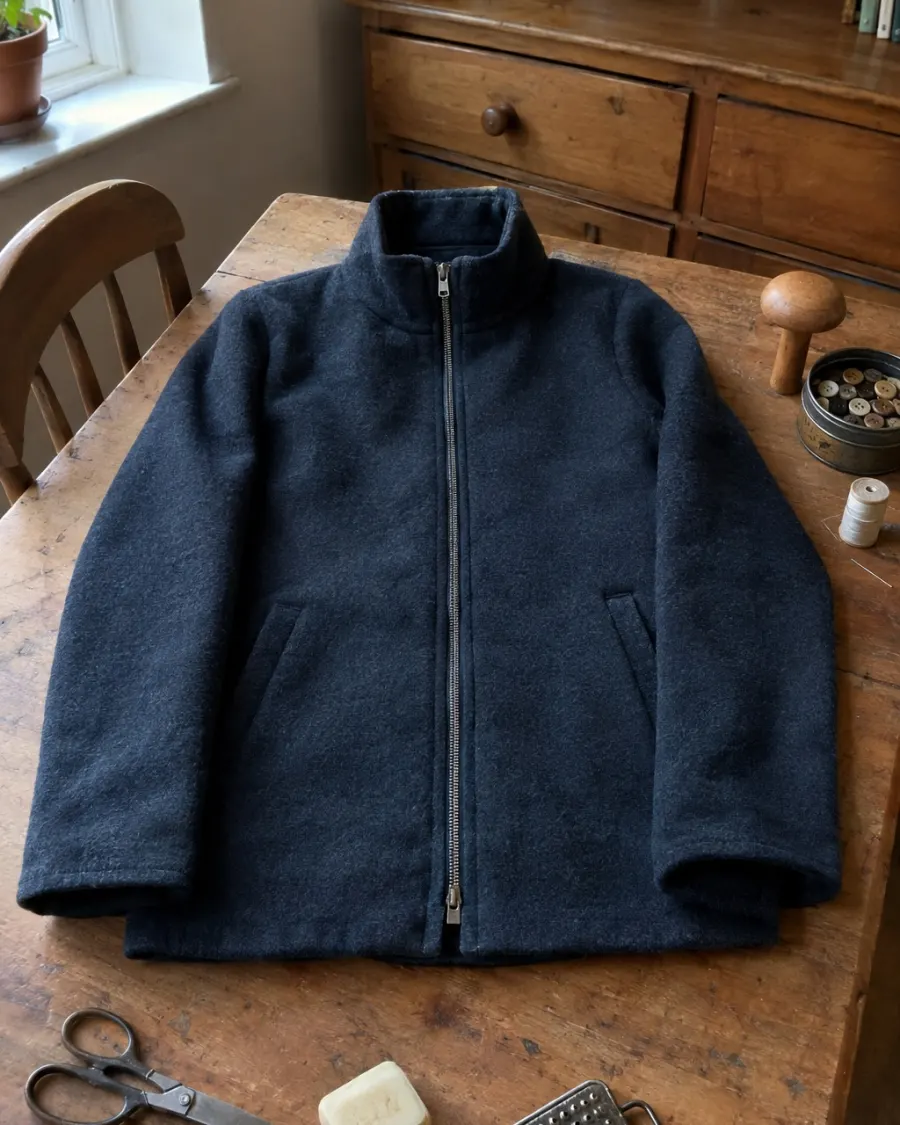 →
→Free a stuck zip
Before you tug, find out what is actually caught in the slider.
 Inside the book
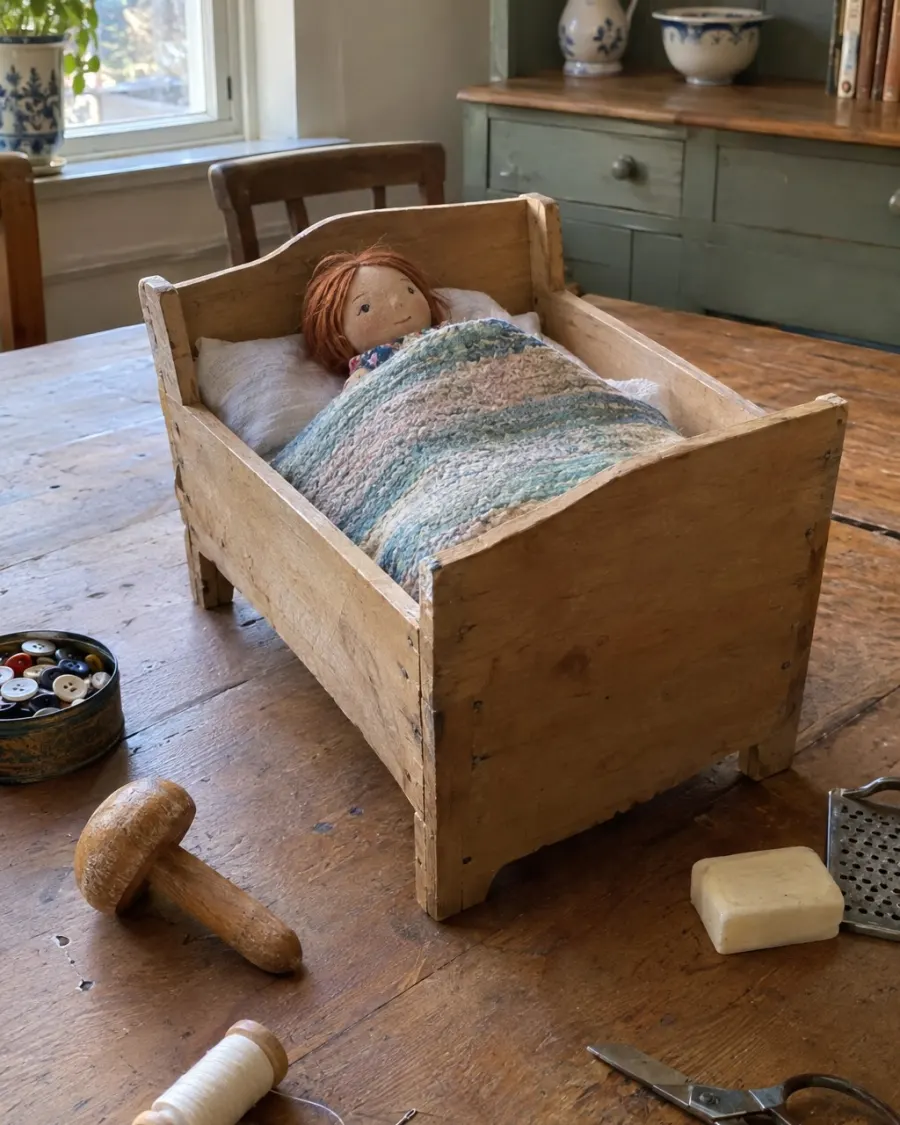 →
→A doll's cot from an apple crate
One gentle twist of two corners tells you whether the crate deserves your evening.
 Inside the book
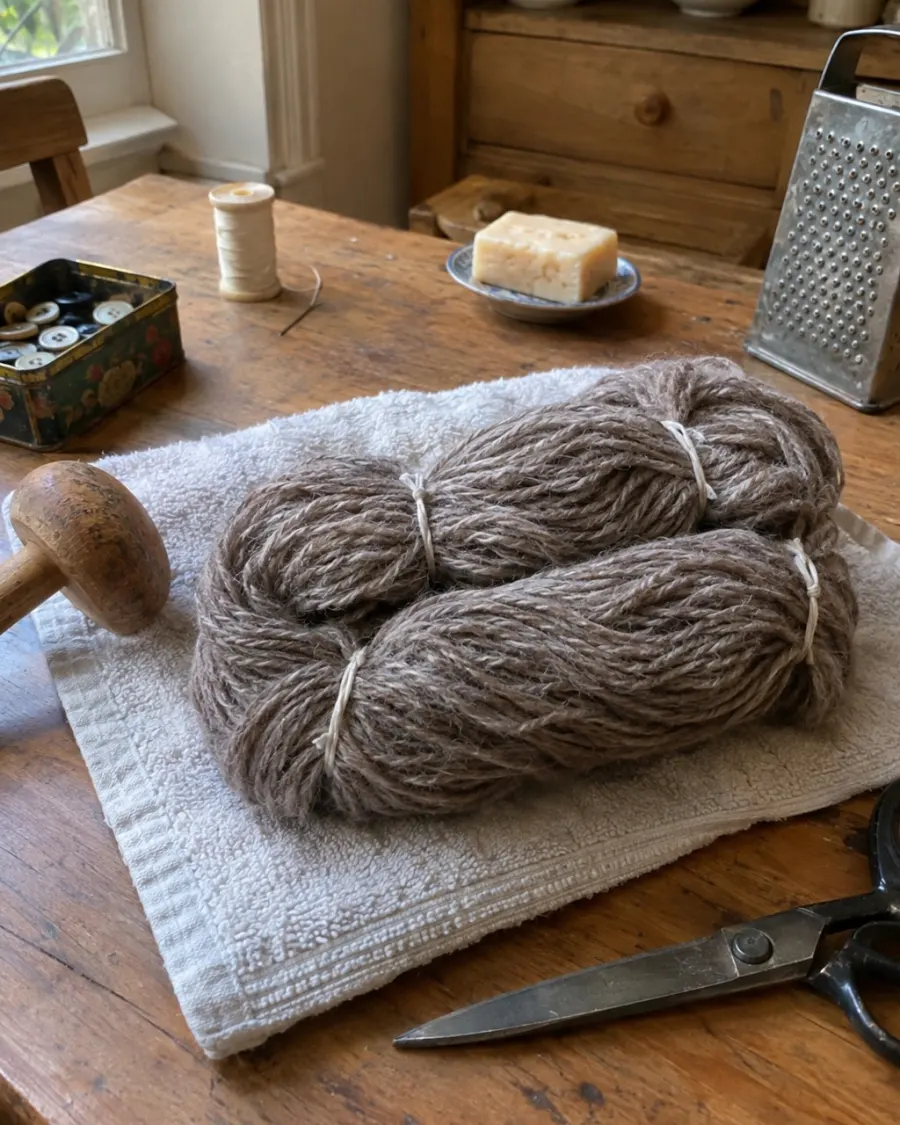 →
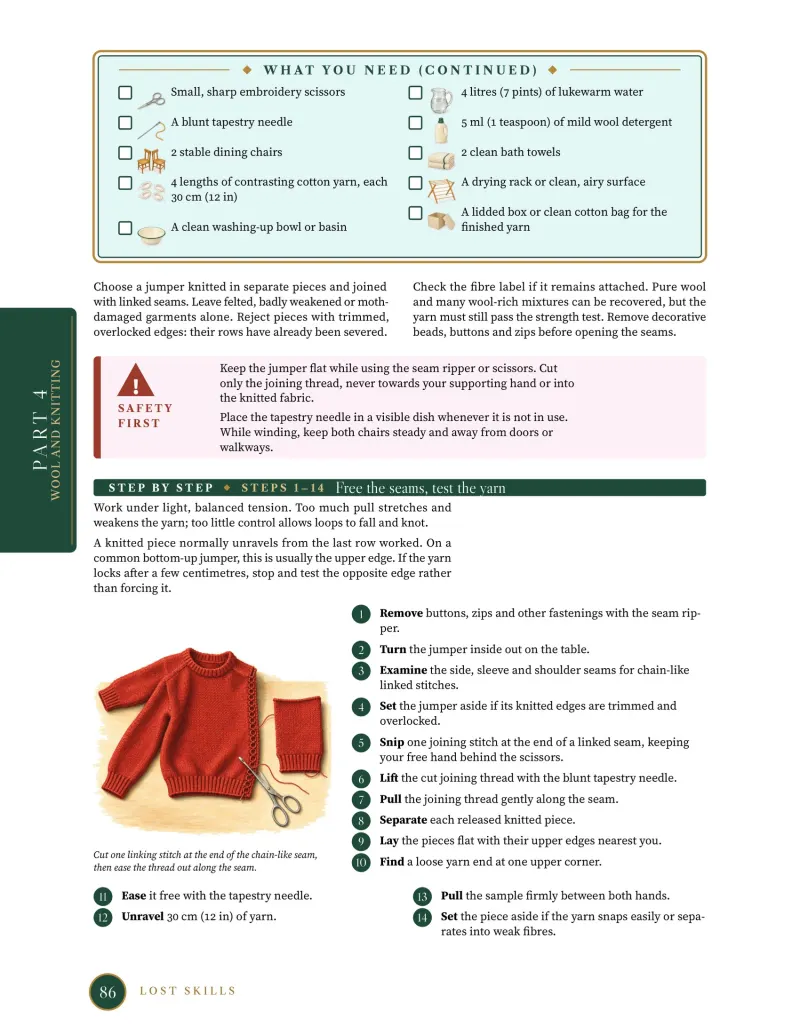
→Unravel an old jumper and re-knit the wool
Check the seams first: some can be pulled apart, and some never will.
The same kitchen, a few evenings later
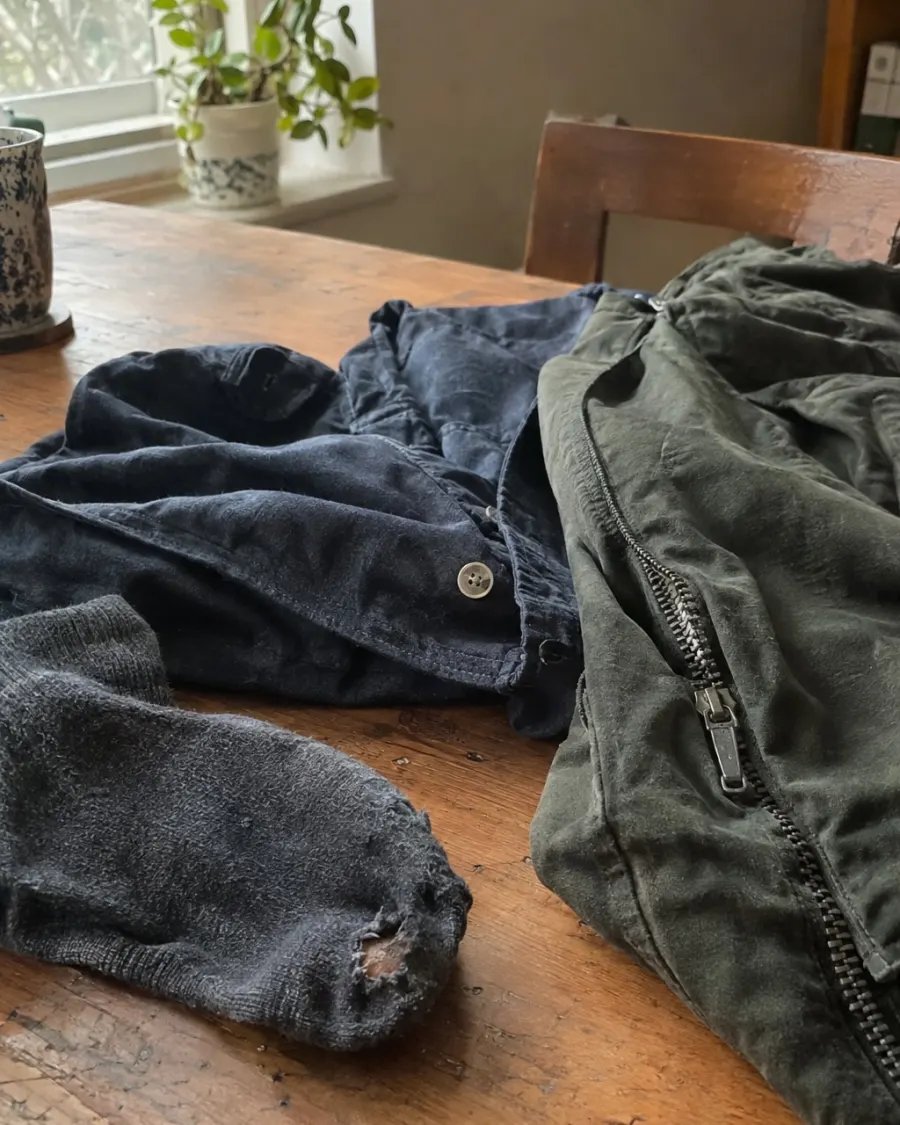 Before
- A sock with a hole goes in the bin.
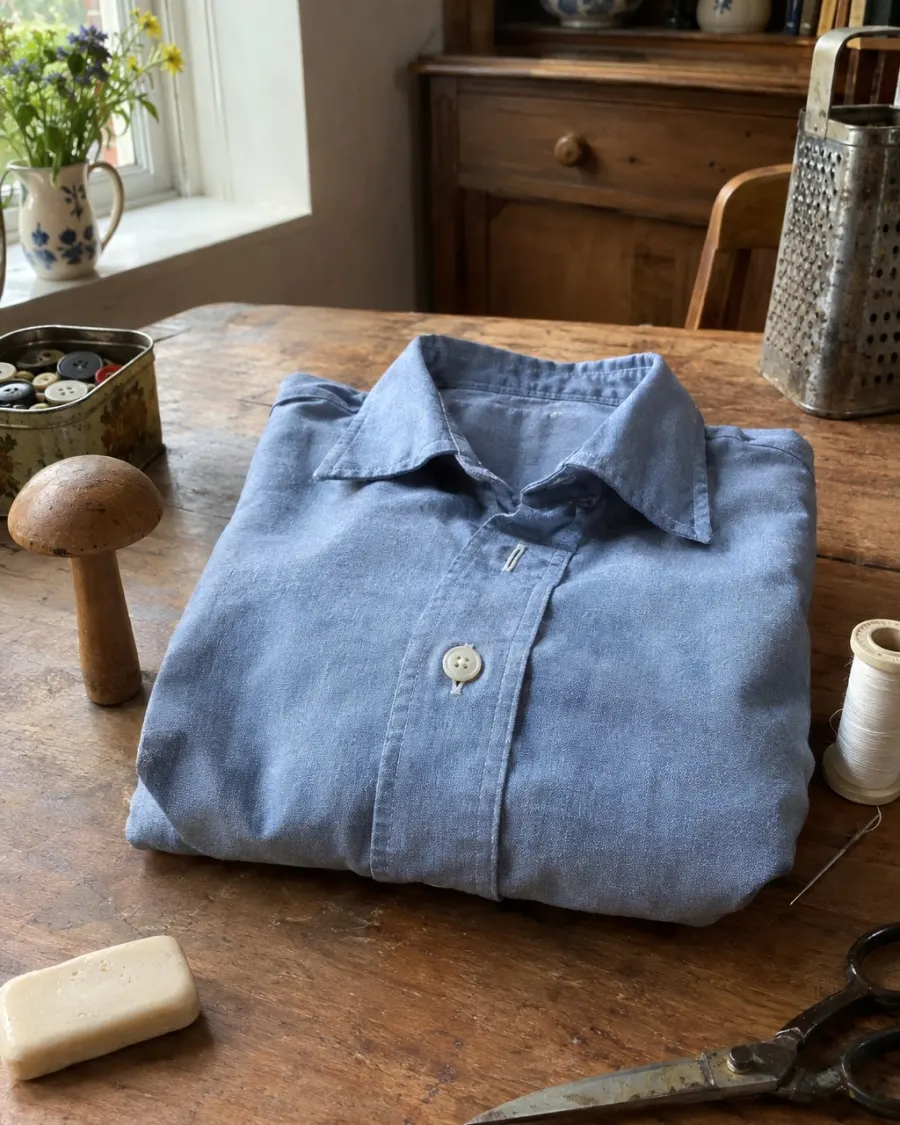
- A shirt waits on the chair, one button short.
- You think: I wish I'd paid attention.
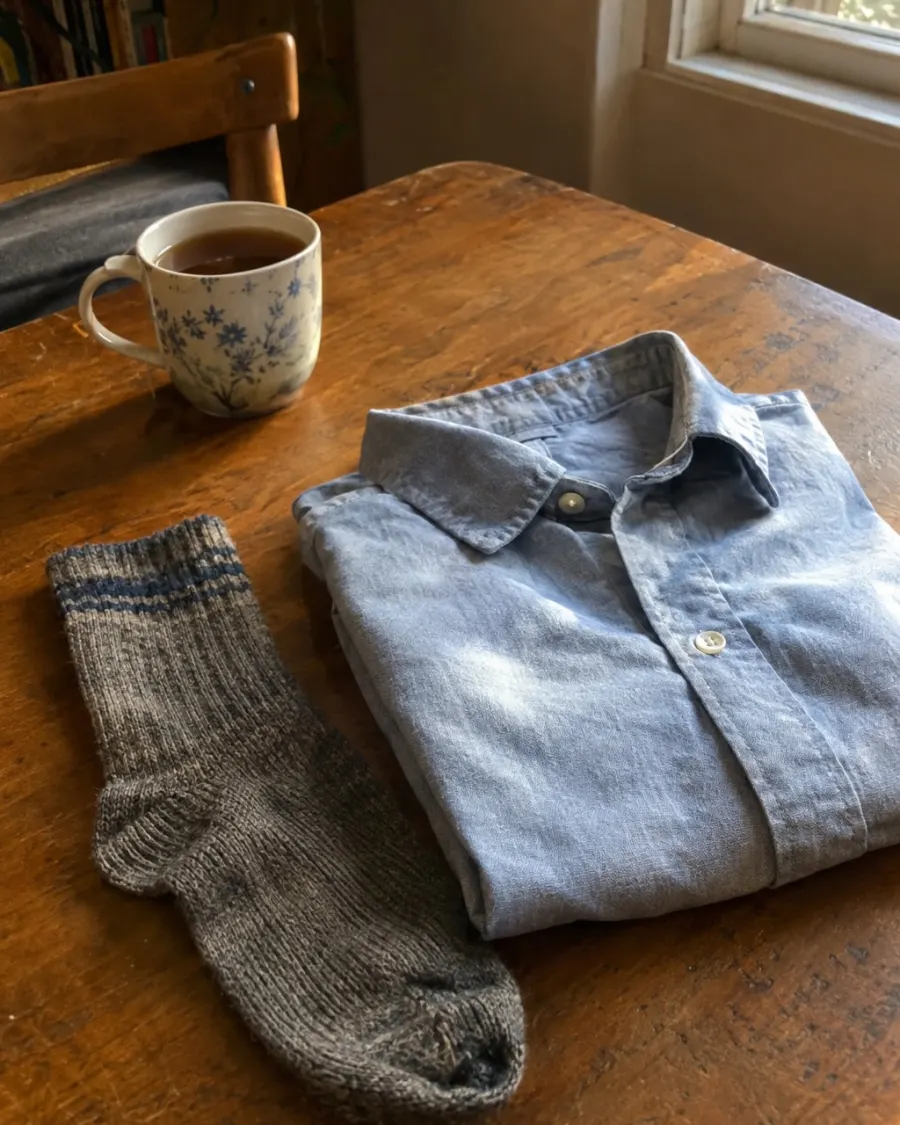 After
After- The sock is darned and goes back in the drawer.
- The button is sewn on to stay, and the shirt is worn.
- You think: I know how to do this.
A real book on the table, with your hands free
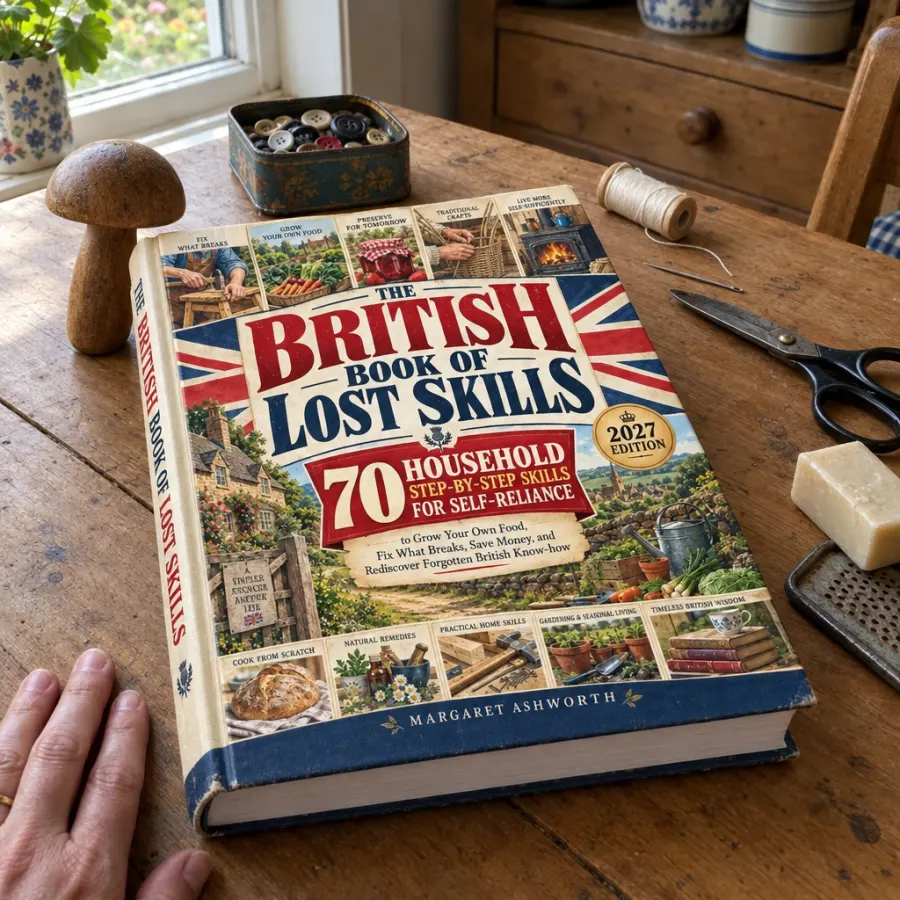
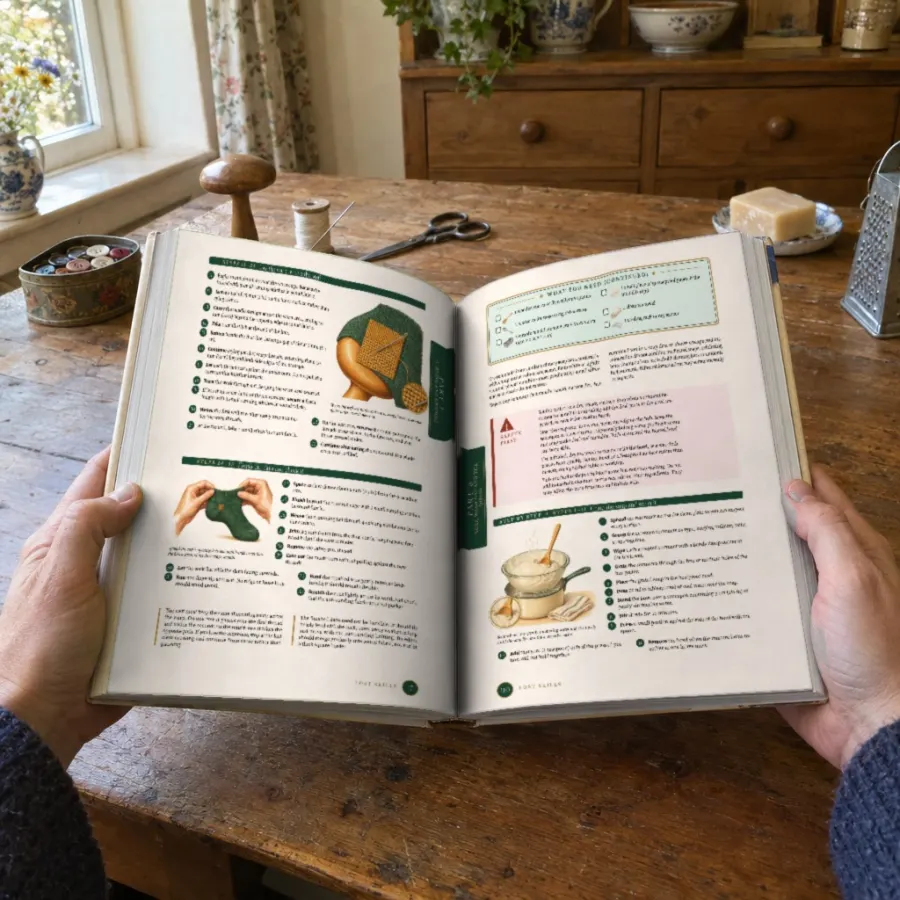
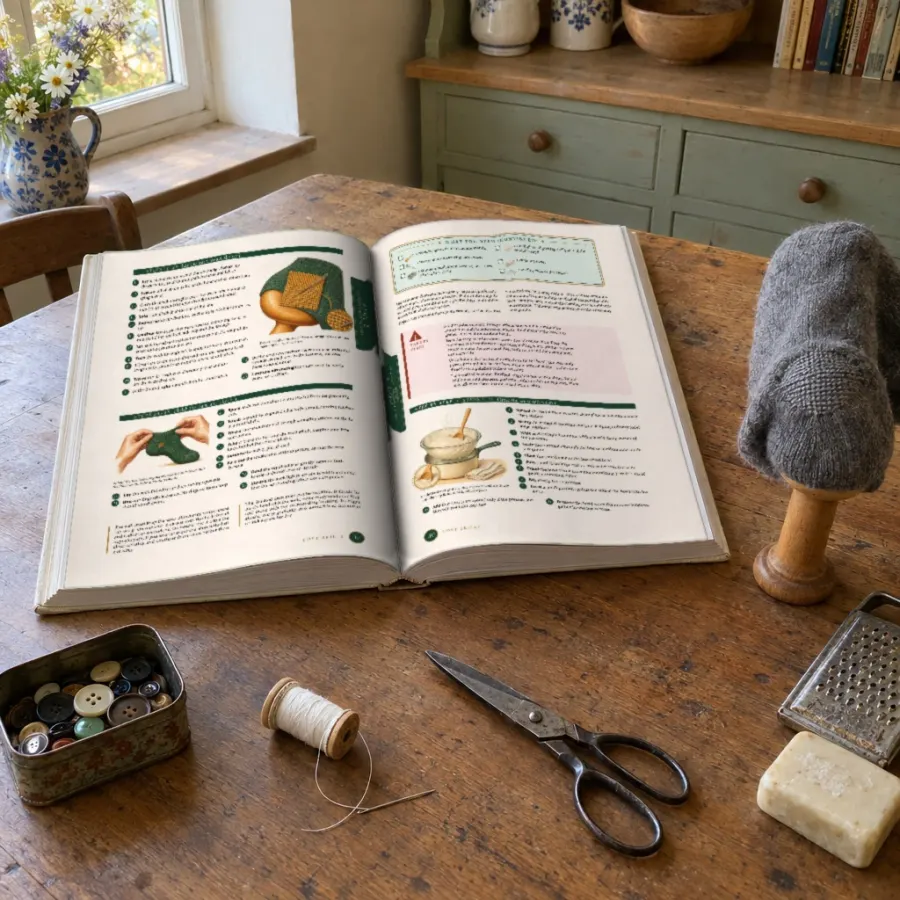
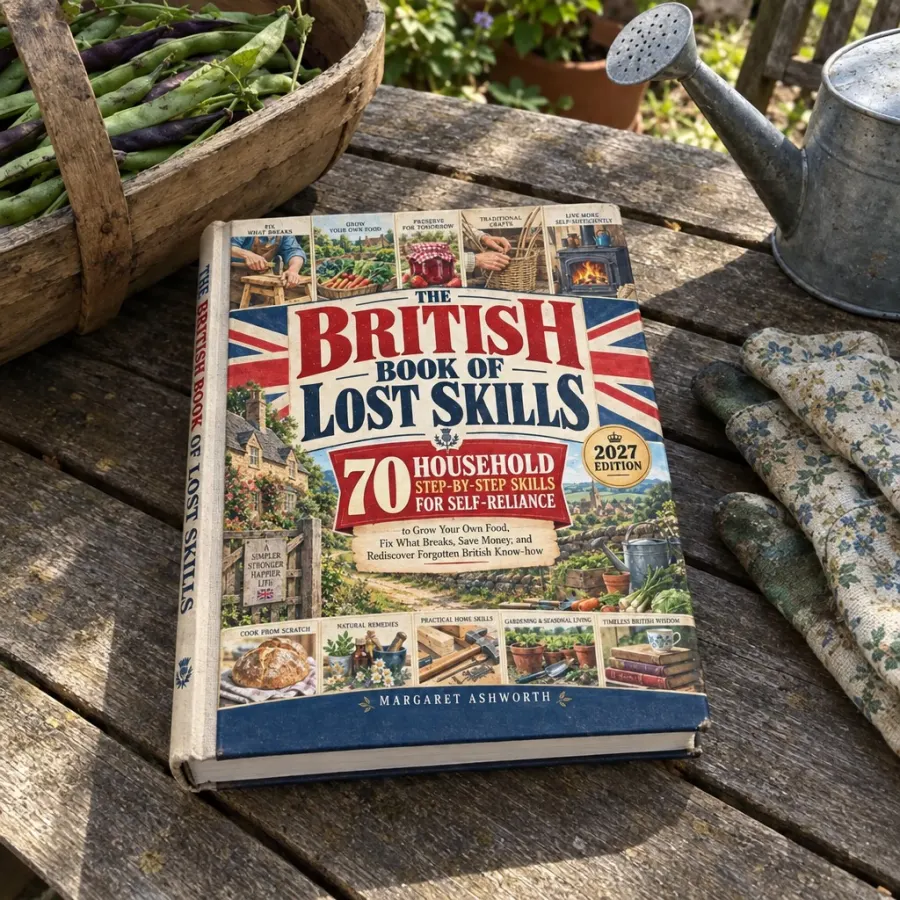
The British Book of Lost Skills has 262 pages, each 21.6 x 27.9 cm (8.5 x 11 in), in full colour, with over 300 step-by-step illustrations. That's large enough to prop against the flour jar and read from a step away while both hands are busy. There is no screen to dim, no clip to rewind, no tab to lose. It holds 70 household skills our grandparents knew, and it stays on your shelf for the next time.
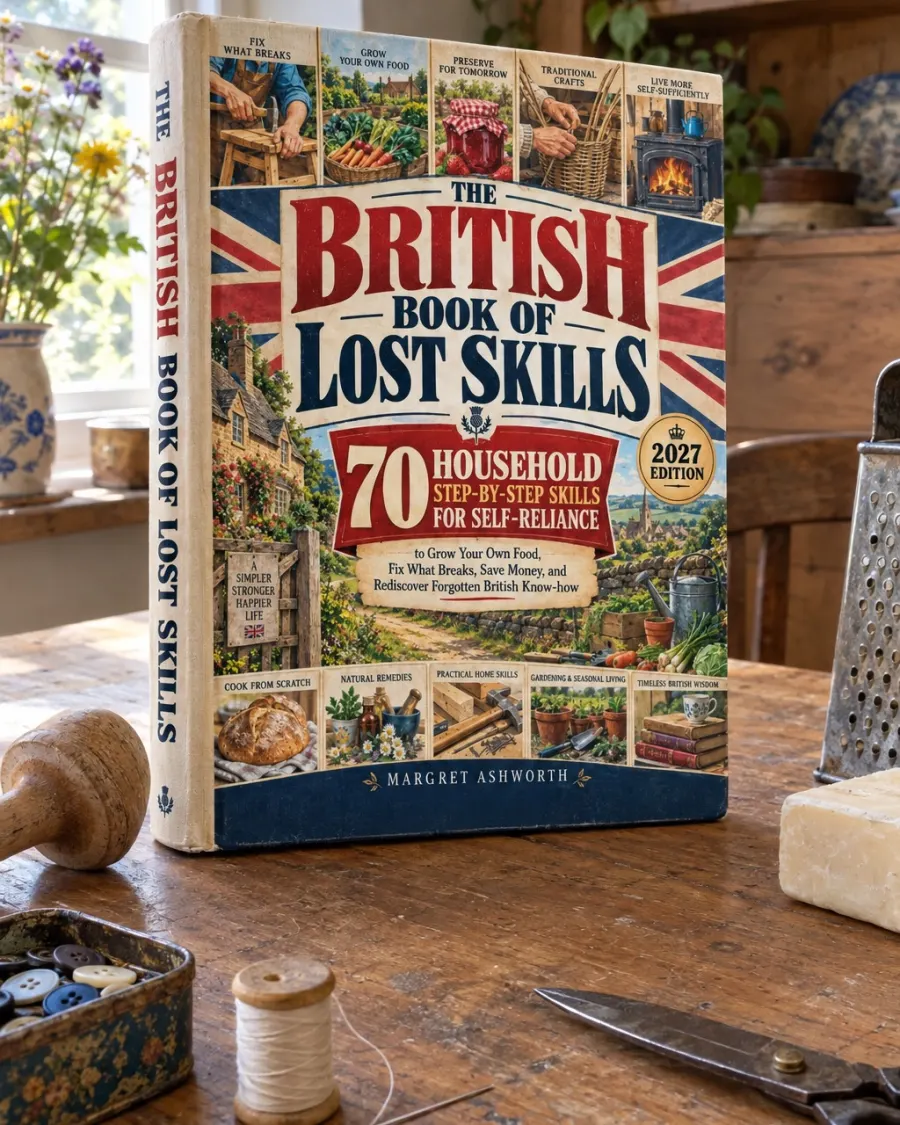
| Size | 21.6 x 27.9 cm (8.5 x 11 in) |
| Pages | 262 |
| Formats | Hardcover or paperback |
| Inside | Full colour, 300+ step-by-step illustrations |
But can't I just look it up online?
You can, and plenty of it is free. Some clips are very good. But a clip is made to be watched, not to be worked beside.
| The book | Free clips online | |
|---|---|---|
| Steps | Every step, numbered, in order | Pieces scattered across many clips |
| Measurements | Metric and imperial, side by side | Units change from video to video |
| Hands | Open on the table, no pausing, no battery | Wiping your hands to pause the clip |
| Checking | A test at the end of each skill | Rarely tells you how to check |
| Keeping it | On your shelf for good | Hard to find again later |
| Real cost | One book, nothing to subscribe to | Free, but it costs your evenings |
Free is lovely, but only when it works. If you've already lost an evening to clips and still have the hole in the sock, a book that stays open beside you may suit you better.
Why it matters more than a tidy drawer
Get a piece of her back
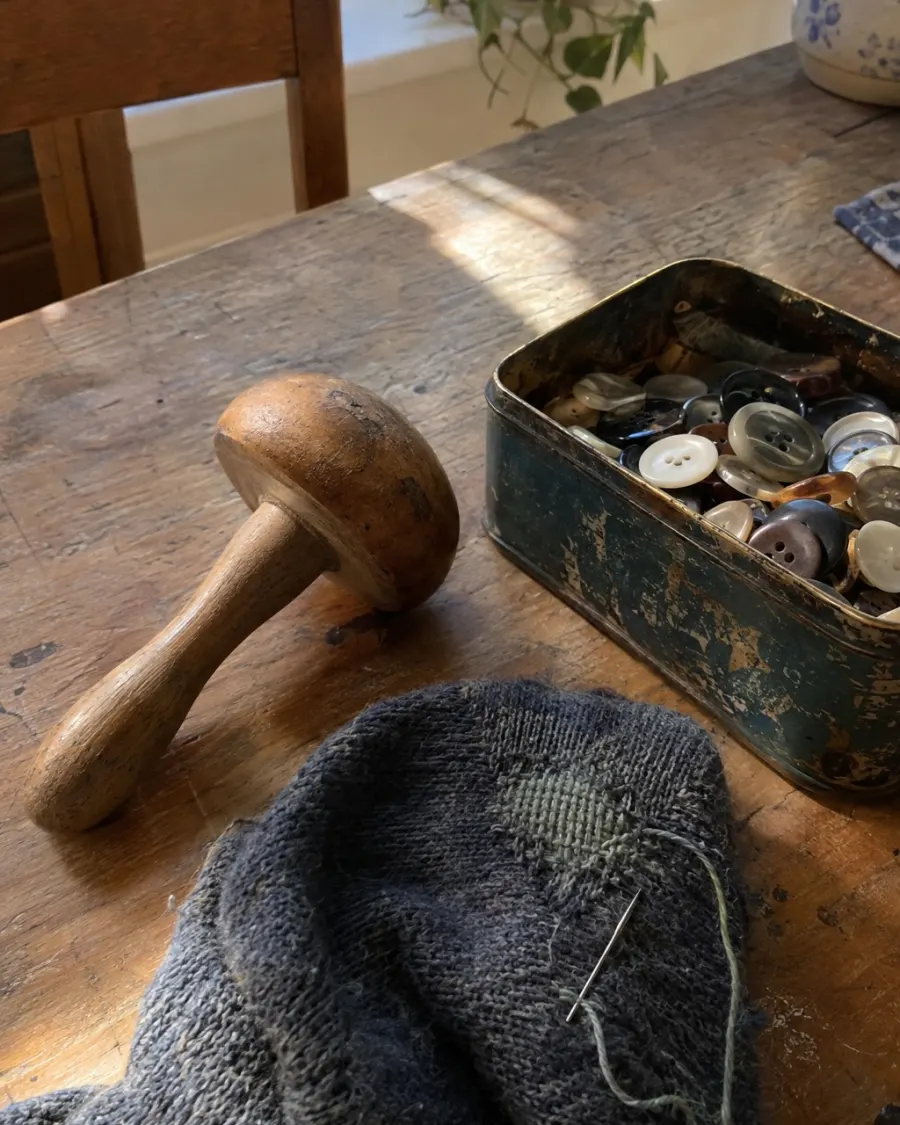
The button tin, the darning mushroom, the well-worn scissors: you have kept them for a reason. Learning what they were for turns objects you can't bear to throw away into skills that you use again.
Waste a little less
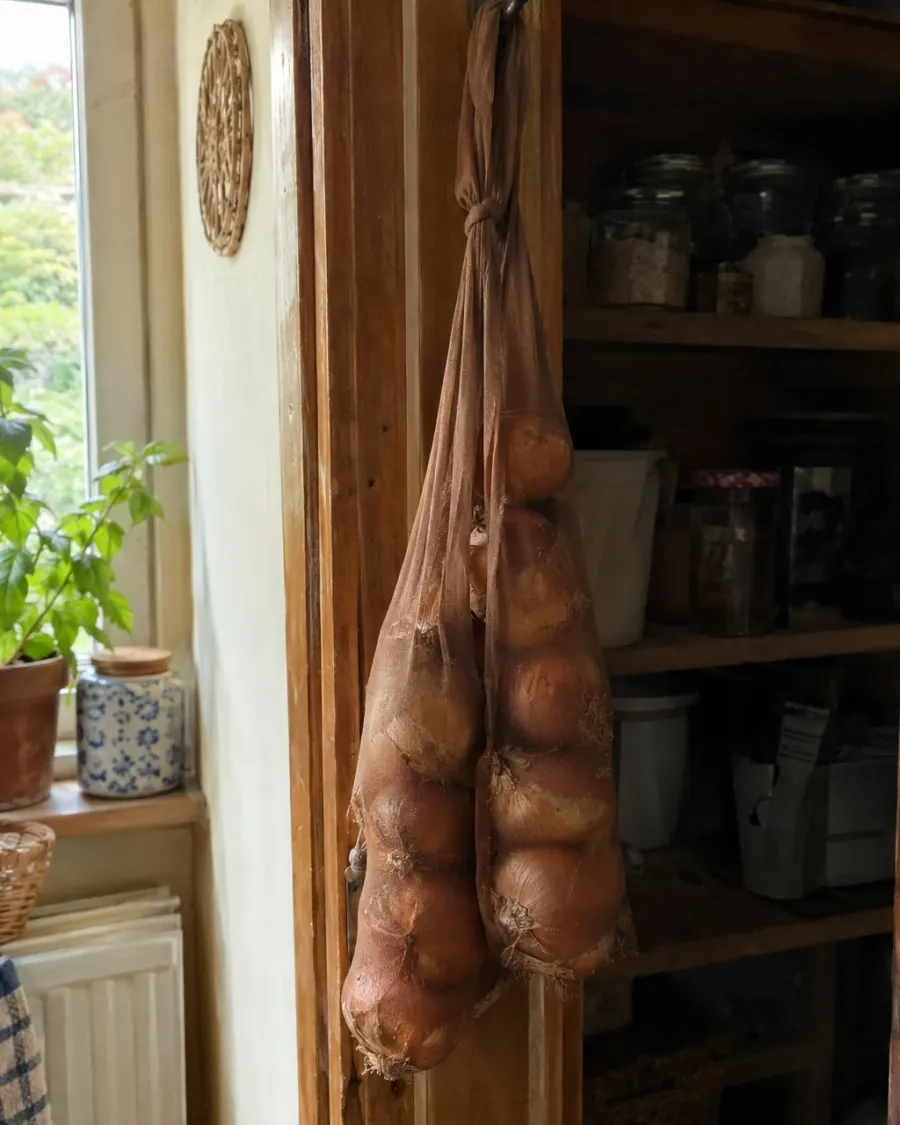
Soap slivers become a new bar. Onions keep in old tights. A sock lasts another season. Nothing grand, but each small save feels like the way things used to be done: nothing wasted.
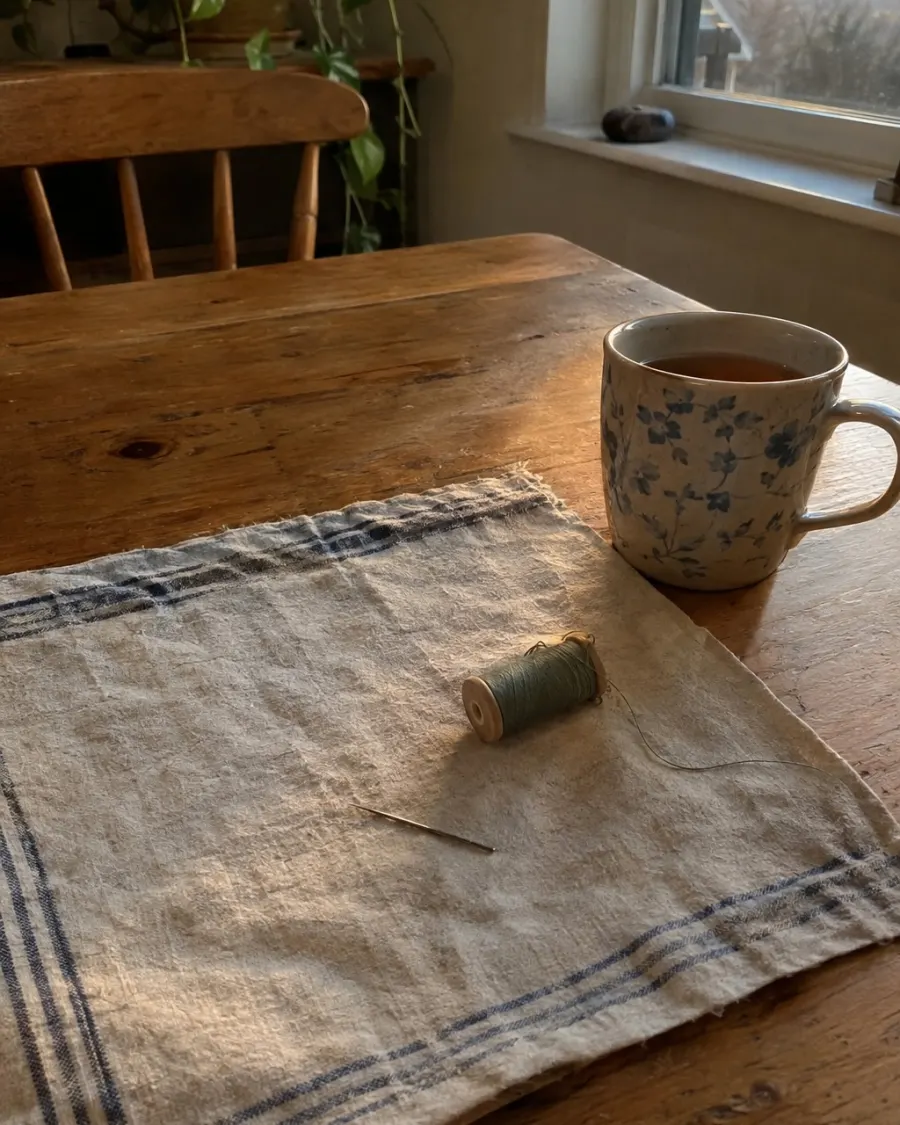
Stop wondering where to start
I'd love to do it myself, but where would I even start? Now there's an answer: pick one skill, clear the table, and follow the numbered steps. Confidence comes from doing it, one evening at a time.
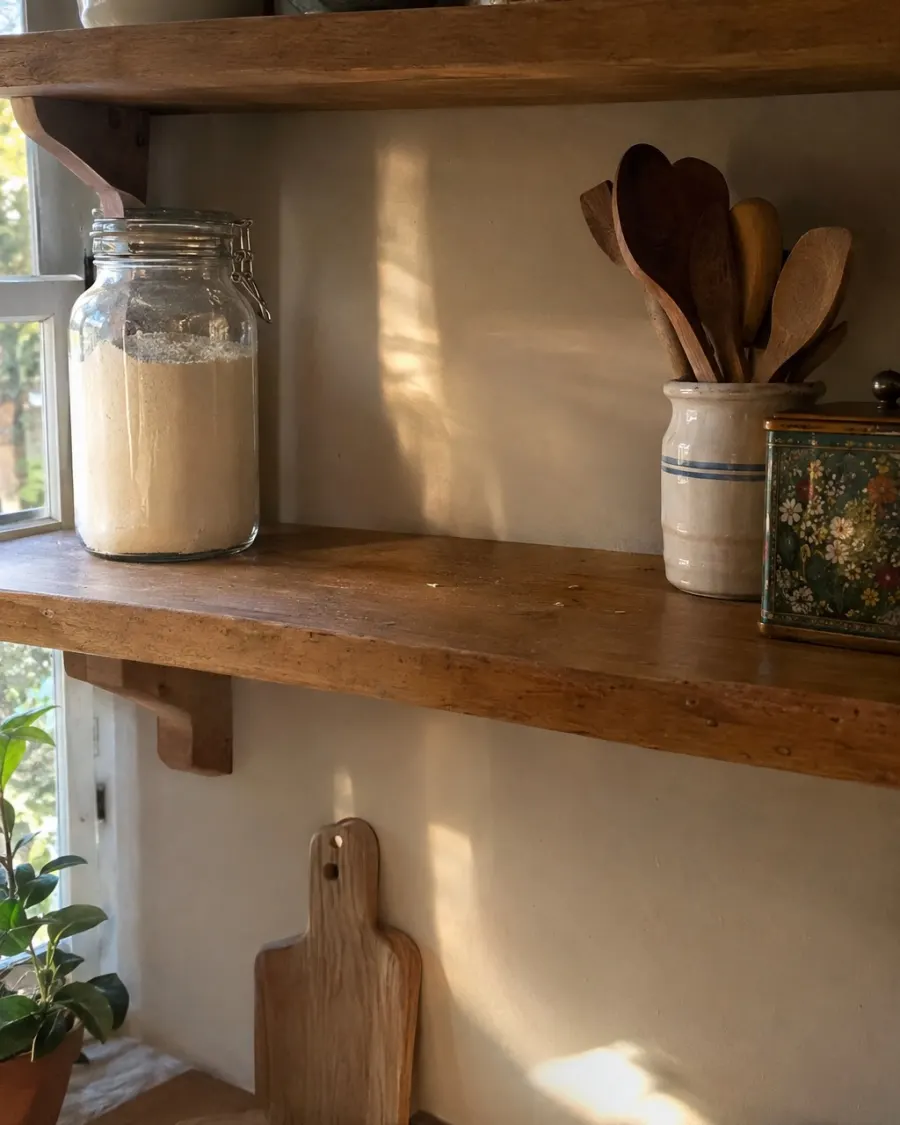
A book to come back to
Some books earn a place on the shelf because you reach for them again and again. This one is made for that: a skill for each evening, and the next one waiting when you want it.
Is this book for you?
- This is for you if you have a favourite sock, shirt or sheet you would rather mend than replace.
- This is for you if you've kept a button tin or a darning mushroom without ever quite knowing what to do with it.
- This is for you if you've watched a clip, missed a step, and ended up with nothing mended.
- This is for you if you like the idea of using up what's already in the house.
- This is for you if you'd rather follow clear, numbered steps than guess.
- This is for you if you want one book to keep on the shelf and come back to.
- It is not for you if you want a quick fix in a few seconds without picking up a needle or a tool.
- It is not for you if you'd rather watch than do: the skills are learned with your hands.
- It is not for you if you're looking for an outdoor survival manual. This book is for the ordinary home.
If that sounds like you, here is what some of our advance readers have to say.
What our first readers say*
Really enjoyed the old recipes
The sections on jam, chutney and homemade bread were my favourites. Lovely traditional ideas and easy to follow.Wonderful memories
Reminded me of my grandmother's house and all the little things she knew how to make and mend. A delightful book.A little treasure
Beautifully presented, interesting to browse and full of skills I'd almost forgotten existed. Very pleased with it.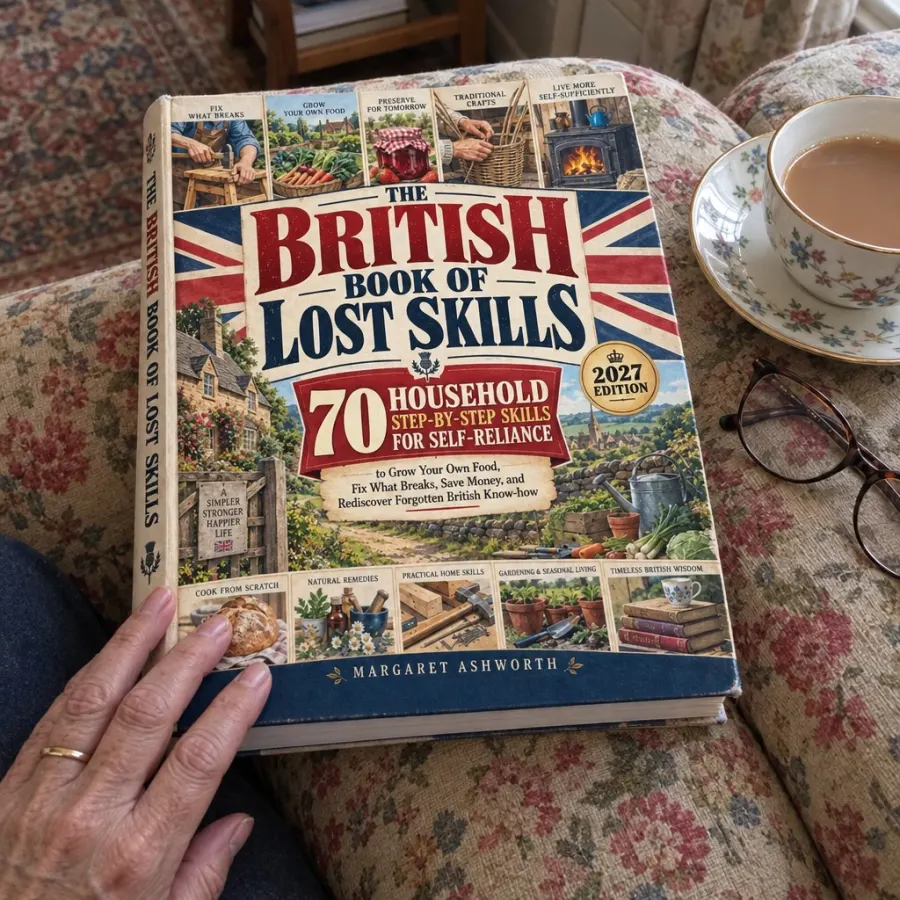
A lovely book to have at home
Such a useful collection of traditional skills. Clear instructions and plenty of interesting ideas. Really enjoyed it.
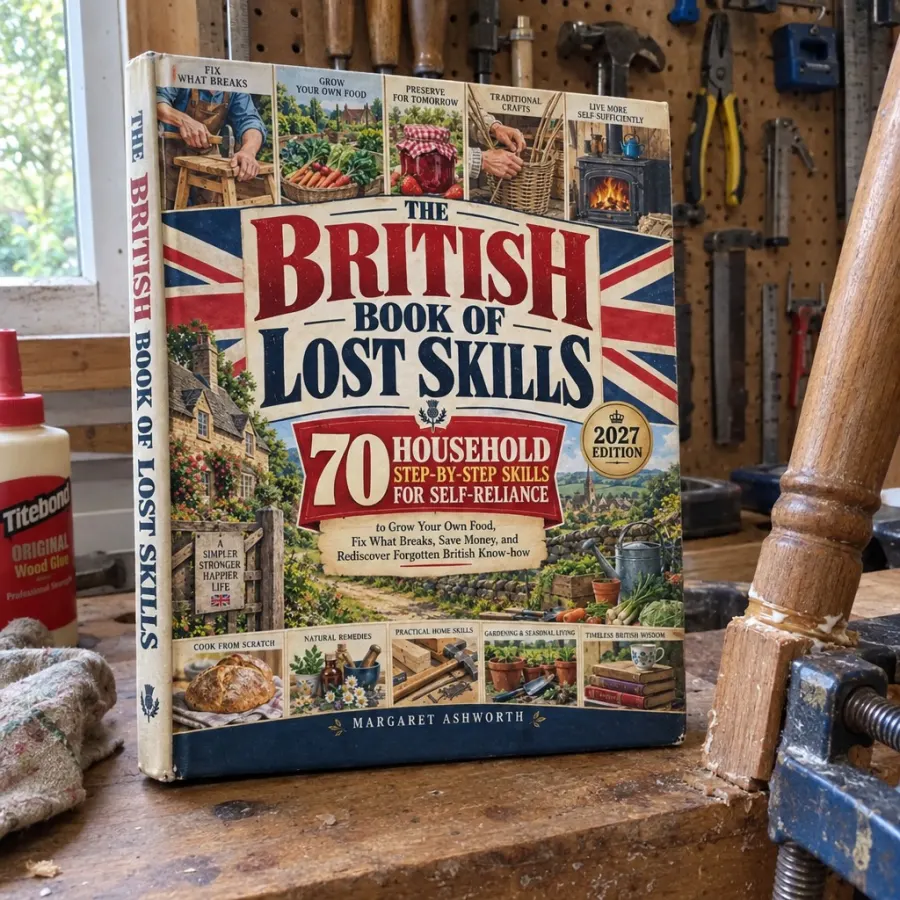
Proper practical advice
I was pleasantly surprised by how detailed this book is. The small household repairs section is particularly good, and I appreciate the advice on when not to attempt something yourself. It's a sensible reference to keep around.
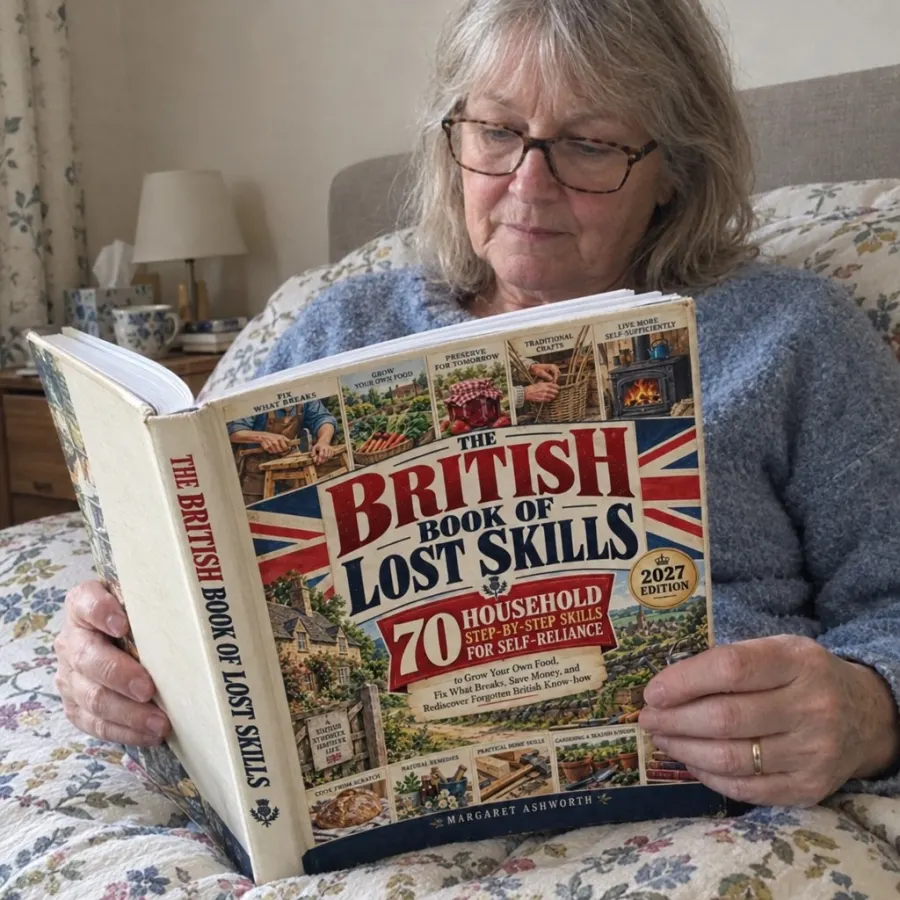
Just like the things my mother used to teach us
This book brought back so many memories of growing up in Yorkshire. My mother never threw anything away if it could be mended, and I remember her sitting by the fire with her sewing basket, repairing socks and jumpers. What I especially like is that the author doesn't simply describe these old traditions. She actually explains how to do them, with proper measurements, materials and clear instructions. Some of the techniques I'd completely forgotten, whilst others were new to me. It's a wonderful way of preserving knowledge that really shouldn't disappear. I'm planning to give a copy to my granddaughter.
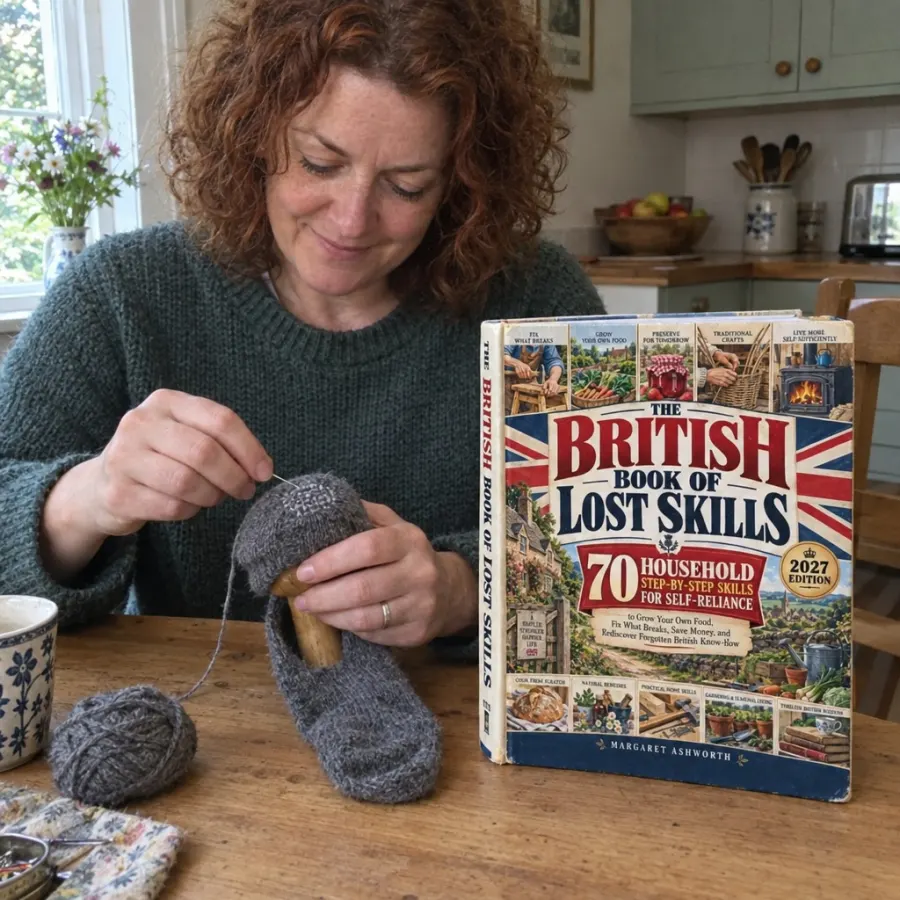
Brilliant for complete beginners
Never thought I'd find myself learning to darn socks, but here we are! Everything is explained clearly enough for someone with absolutely no sewing experience.

More useful than I expected
There's a good balance between traditional methods and modern common sense here. I particularly liked the sections on fixing small things around the house. Some instructions are rather lengthy for straightforward jobs, but I'd much rather have too much detail than be left guessing halfway through a repair.
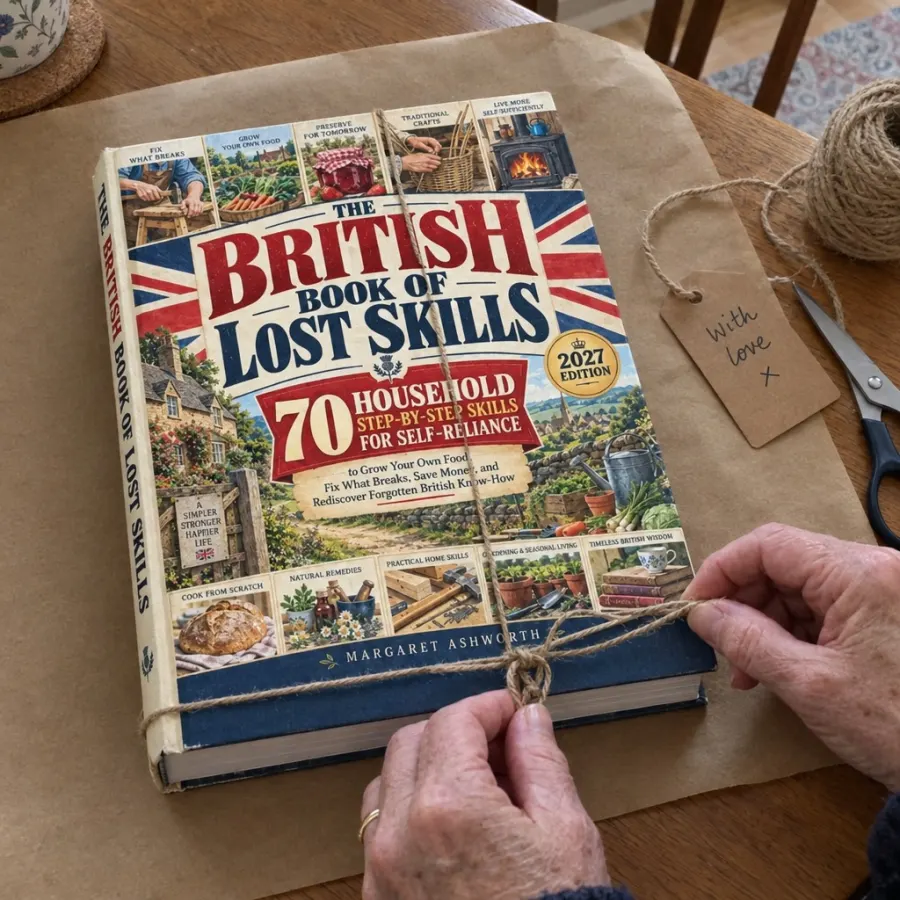
Bought as a gift
Bought this for my daughter who's just moved into her first home. She loves it, especially the practical household tips.
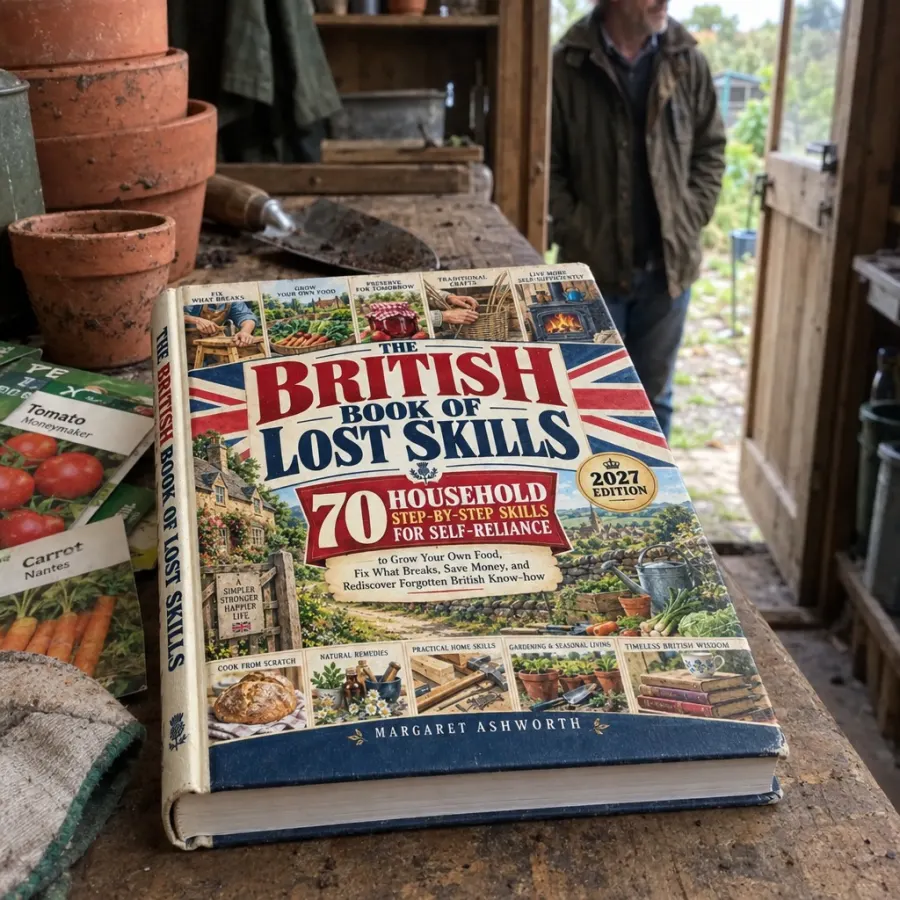
An enjoyable read with some genuinely useful gardening advice
I've kept an allotment for nearly fifteen years, so I wasn't expecting to learn much from the gardening chapters. Still, I found several interesting ideas, particularly around seed saving and growing vegetables in containers. The book covers considerably more than gardening, of course. There's sewing, preserving food, household cleaning and all sorts of small repairs. I wouldn't call it a replacement for specialist books on any of those subjects, but as a general introduction to traditional household skills, it does a very good job.
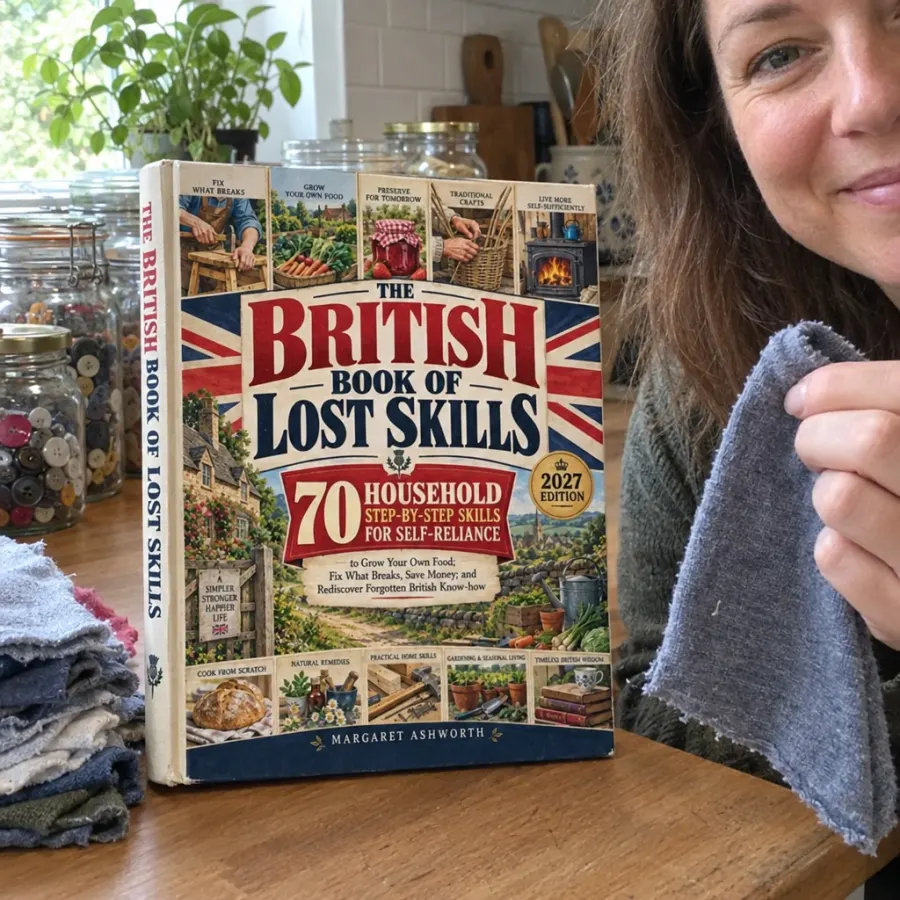
Makes you want to stop throwing everything away
I've been trying to live a bit more sustainably, and this book fits perfectly with that. It's full of practical ways to reuse old materials and make everyday things last longer. I especially appreciate that it explains the actual process instead of just giving vague suggestions.
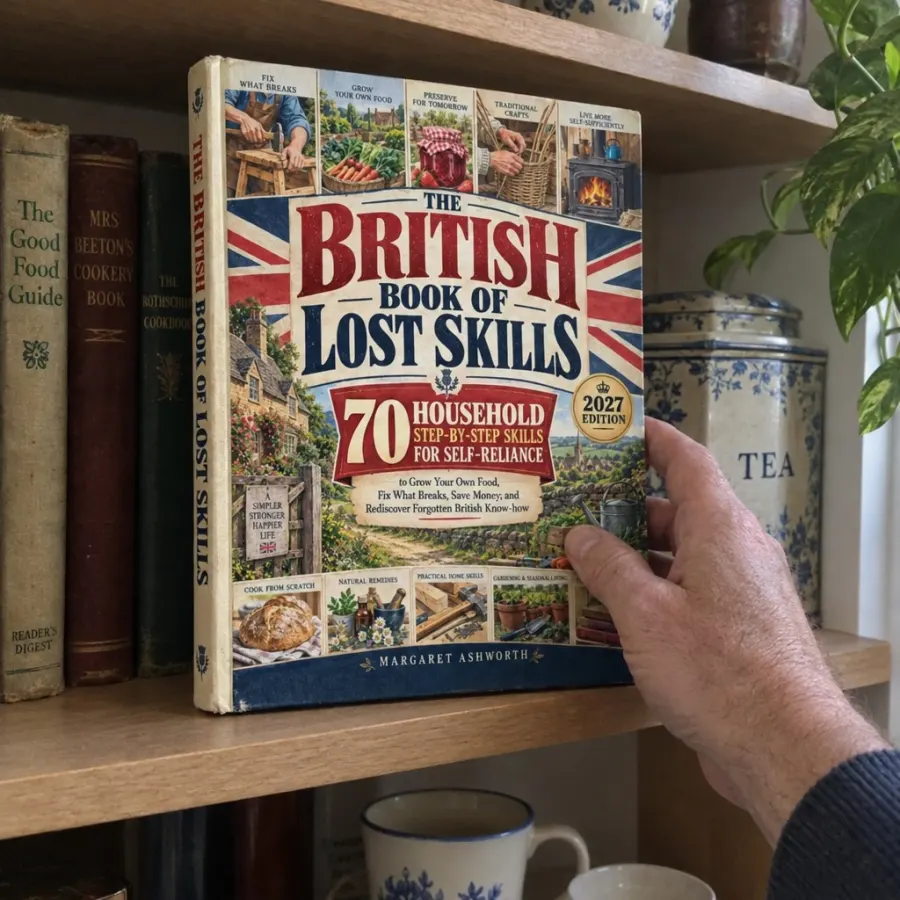
A substantial reference book, although quite detailed
This isn't really a book I'd sit down and read from beginning to end. It's better suited to picking a particular job and following the relevant instructions. The structure is consistent, with materials, timings, safety information and troubleshooting. That's helpful, especially for someone who hasn't attempted a repair before. My only criticism is that certain simple tasks have a lot of individual steps. I can imagine some readers finding that a little excessive. On the other hand, there's very little ambiguity, which is probably more important when you're learning. Overall, a worthwhile addition to the household bookshelf.
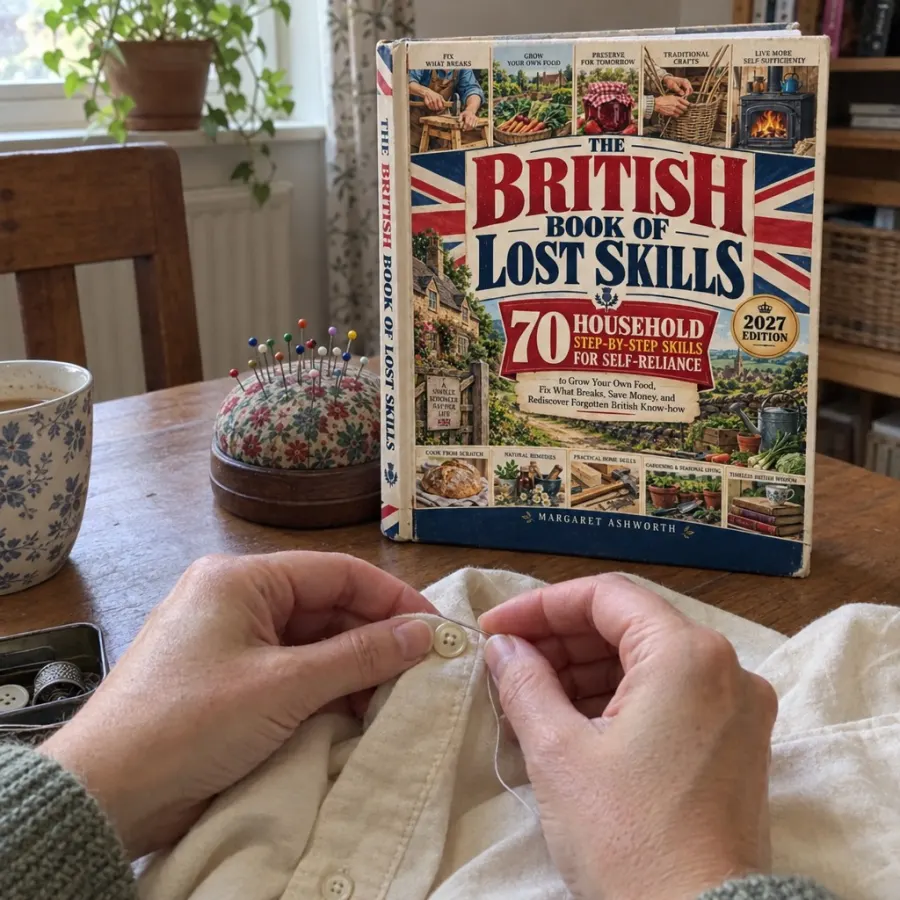
Exactly what I needed to start learning basic sewing
I'm hopeless with anything involving a needle and thread, but I've always wanted to learn. What I like about this book is that it doesn't assume you understand sewing terms already. The instructions start with the equipment and explain each stage carefully. I particularly enjoyed reading about repairing buttons, hems and worn clothing. There's much more here than sewing, so I expect I'll be returning to other chapters as well.
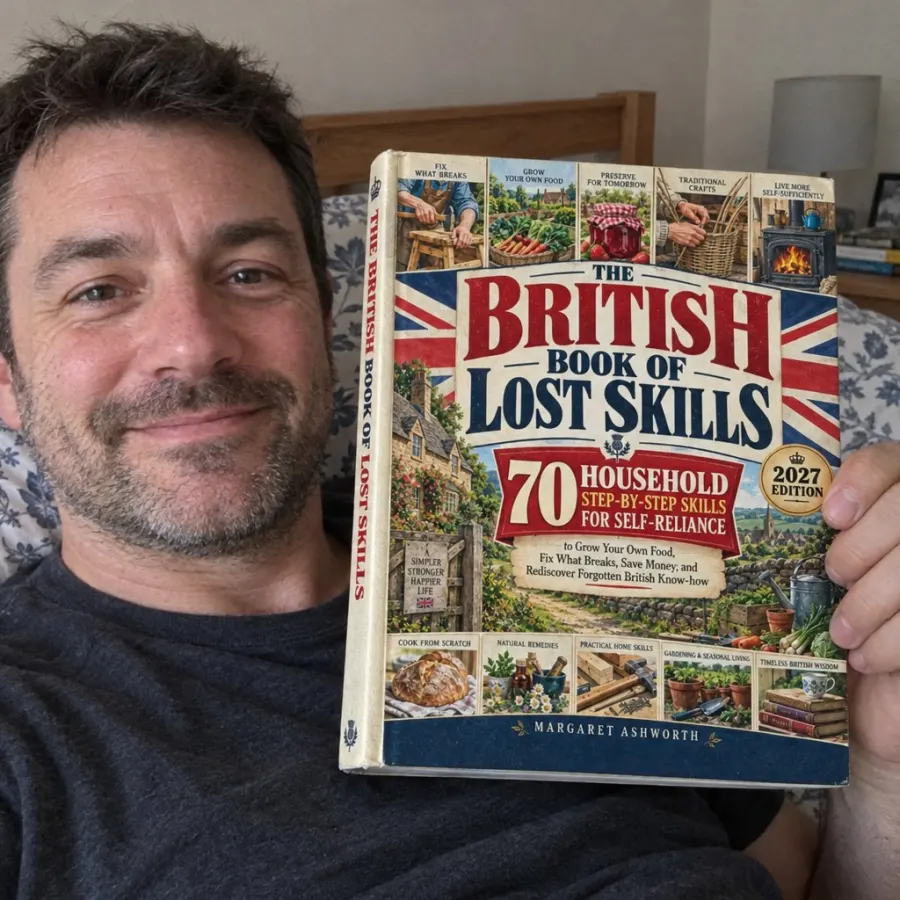
Useful information without the unnecessary nostalgia
I appreciate that this book focuses on what actually works rather than romanticising the past. There are plenty of old household methods worth keeping, but not everything our grandparents did was necessarily better. The safety advice is a welcome addition, and the troubleshooting sections are particularly practical. Good book.
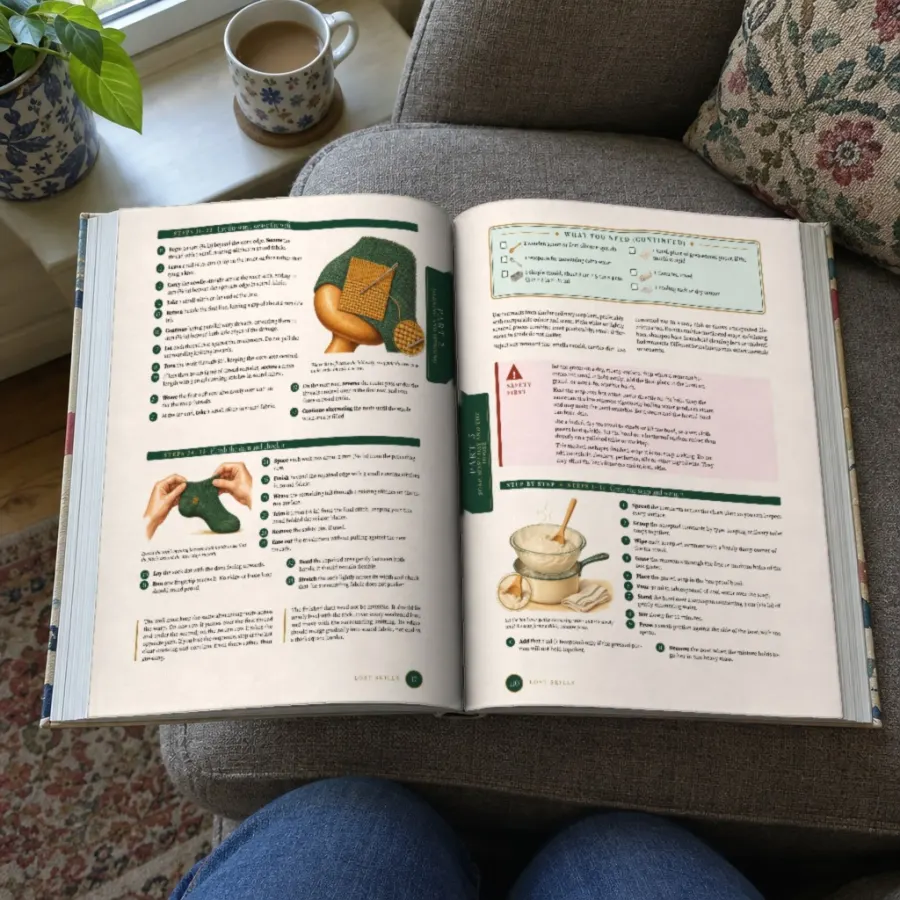
Practical ways to save money around the house
With everything getting more expensive, I wanted to learn how to repair things rather than constantly buying replacements. The clothing and household maintenance sections are probably the most useful for me. I like having one book that covers so many different everyday jobs. Not every project will necessarily save you money once you consider the time involved, but learning the skills is worthwhile in itself. I'd recommend it to anyone interested in becoming more self-sufficient at home.

Refreshingly British
Nice to find a book that uses British terminology and measurements throughout. The historical references are interesting too.
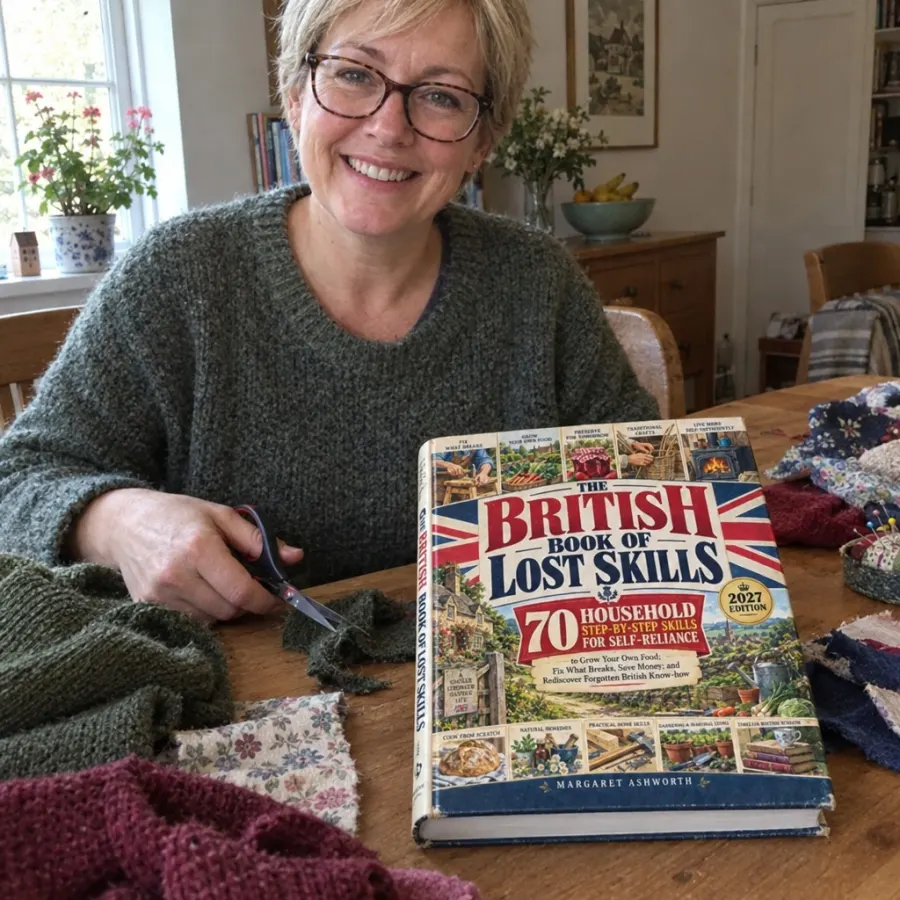
Something the whole family can learn from
I've been looking for practical activities to do with my teenage children that don't involve another screen. This book has given us quite a few ideas, particularly the projects involving old clothes and household scraps. Some require more patience than others, but I think that's part of their value. I like the emphasis on understanding how things work rather than simply following instructions without thinking. It's the sort of knowledge that stays useful throughout life.
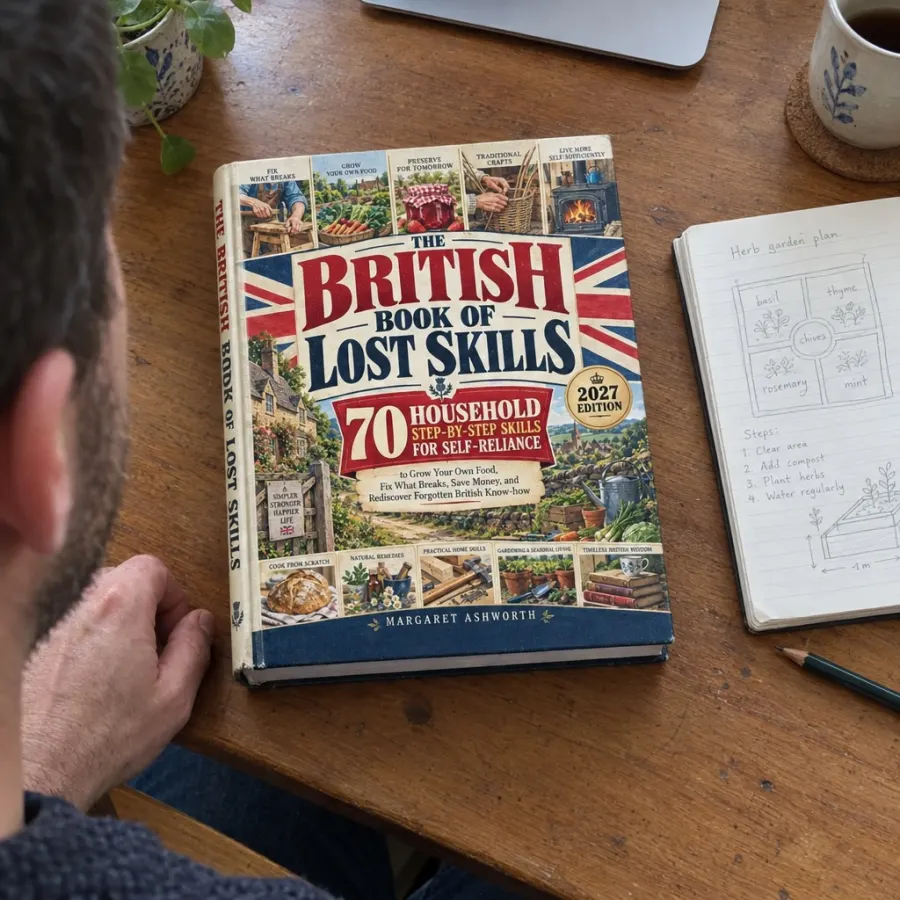
Clear layout and helpful illustrations
The illustrations make the instructions easier to follow, particularly in the sewing chapters. Everything is organised logically, so finding a particular skill doesn't take long.
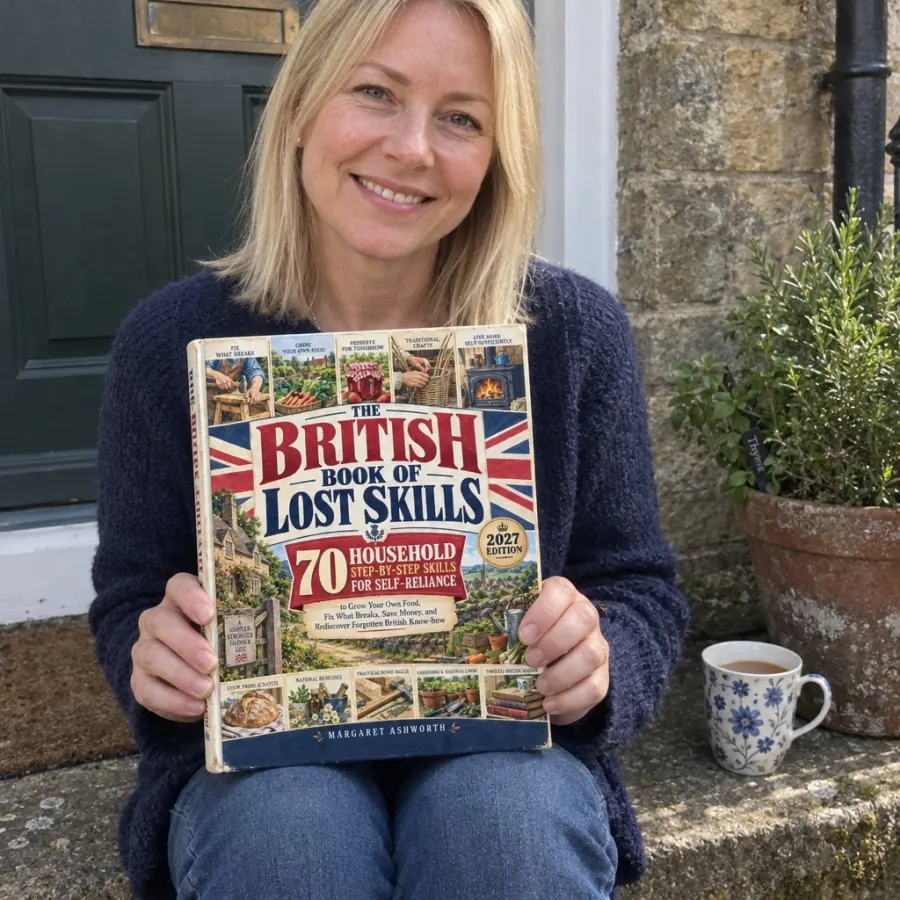
Interesting, although not every project is for me
I enjoyed this more than I thought I would. There's an impressive range of topics, from knitting and mending to cooking and gardening. Personally, I can't see myself spending several hours making curtains by hand, but I can certainly appreciate knowing how it's done. The smaller repairs and cleaning techniques are much more relevant to my everyday life. That's probably the strength of the book: different readers will find different things useful.
The kind of knowledge worth passing down
I think we've become so accustomed to replacing things that we've forgotten how satisfying it can be to repair or make something ourselves. What makes this book special is the breadth of subjects covered. You can learn to mend a garment, make simple household items, preserve food or grow vegetables, all within the same volume. The instructions are detailed and thoughtfully arranged, and the historical background adds interest without taking attention away from the practical work. It's not a book I'll use every day, but I can easily imagine reaching for it whenever a small job needs doing. A lovely resource for anyone who values traditional skills.
Get the skills back, and the app and three PDF guides too
Imagine the next worn sock or loose button as an invitation rather than a chore. You clear the table, open the book at the right page and follow it one small step after another. The Kitchen-Table App comes with your copy, so you can follow all 70 skills one step at a time on phone, tablet or computer. Three PDF guides come with it too. A link in your order email opens a page called "Your free library", where everything is waiting.

For a limited time, the app and the three PDF guides are free with every copy.
The Kitchen-Table App
All 70 skills one step at a time, with the book's colour pictures, plus read-aloud, timers, a shopping list and 394 fixes for when something goes wrong. Works on phone, tablet and computer.
- All 70 skills one step at a time, with the book's colour pictures
- Read-aloud, timers and a shopping list
- 394 fixes for when something goes wrong
- Works on phone, tablet and computer
 PDF
PDFGran's Year
50 British traditions, month by month: where each one came from, and a skill from the book to try each month. 28 A4 pages, PDF.
- 50 British traditions, month by month
- Where each one came from, and a skill from the book to try each month
- 28 A4 pages, PDF to download or print
 PDF
PDFWaste Not, Want Not
157 old sayings Gran used, what each one means and where it comes from, plus the people who came to the door and the myths worth retiring. 31 A4 pages, PDF.
- 157 old sayings Gran used: what each one means and where it comes from
- Plus the people who came to the door, and the myths worth retiring
- 31 A4 pages, PDF to download or print
 PDF
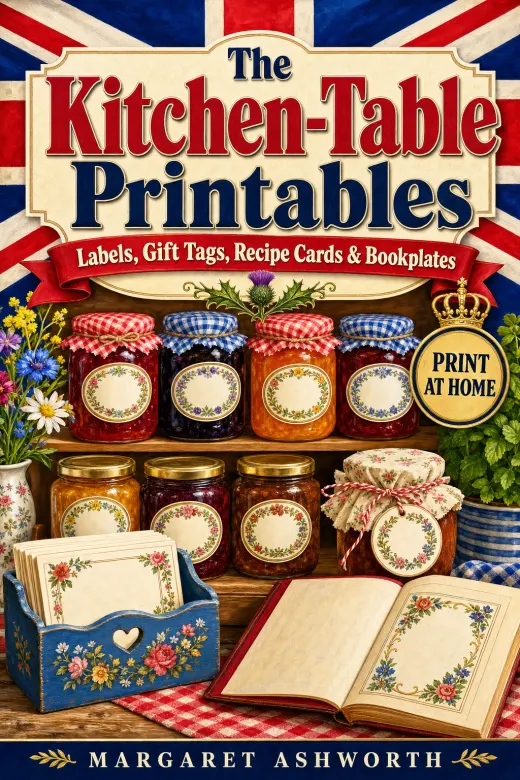
PDFThe Kitchen-Table Printables
All 70 skills one step at a time, with the book's colour pictures, plus read-aloud, timers, a shopping list and 394 fixes for when something goes wrong. Works on phone, tablet and computer.
- Jar and larder labels, gift tags, family recipe cards and bookplates
- Ready to print at home
- 8 A4 pages, PDF
Choose your edition
Get the skills backSecure checkout · Arrived damaged? We replace it free.DAY
Try it at your own kitchen table, and the risk is ours
Read it, use it, try the skills. If it isn't for you within 60 days, email us for a full refund.
Questions
How big is the book, and what does it look like?
It has 262 pages, each 21.6 x 27.9 cm (8.5 x 11 in), printed in full colour with over 300 step-by-step illustrations. It's big enough to prop up on the table while you work.
Do you deliver to the United Kingdom?
Yes. The book is sent to addresses across the United Kingdom. Delivery details are shown at checkout, before you confirm anything.
What if it arrives damaged?
Get in touch with a photo and we'll put it right. The terms are set out beside the guarantee.
How does the 60-day guarantee work?
Read the book and try the skills. If it isn't for you within 60 days, email us and we'll give you a full refund. The terms are set out beside the guarantee. This does not affect your statutory rights.
I've never sewn or mended anything. Is it for me?
Yes, you can start here. Each skill starts by laying out your tools, then moves in small numbered steps with a picture for each stage. Nothing is taken for granted, and you can begin with the simple skills.
Is it written for readers in the United Kingdom?
Yes. It uses British English, metric measurements with imperial beside them, and everyday home objects you'll recognise: a darning mushroom, a button jar, old tights, an apple crate.
Can I give it as a gift?
Yes. It suits anyone with a kitchen table and a drawer of things to mend. The Kitchen-Table App and the 3 bonus PDF guides come with every copy for a limited time.
What exactly are the free gifts, and do I pay extra for them?
There are four: The Kitchen-Table App, plus three PDF guides: Gran's Year, Waste Not, Want Not, and The Kitchen-Table Printables. You pay nothing extra. They are free with every copy while this limited-time offer runs.
How do I get the app and the PDF guides?
A link in your order email opens a page called "Your free library". There you'll find The Kitchen-Table App, which works on phone, tablet and computer, and the 3 PDF guides to download or print.
Other 'lost skills' books tell you what to do but not how. Is this the same?
No. Every skill is a full procedure: the tools, small numbered steps, pictures, and, in most skills, a final check so you know it worked.
Two roads from your kitchen table
You can keep things as they are. The next sock goes in the bin, the shirt waits on the chair, and the thought stays: I wish I'd paid attention. Or you can take the skills back, one evening at a time.
Choose your copy, and The Kitchen-Table App and 3 bonus PDF guides come with it for a limited time. When the book arrives, clear the table, pick the skill you most want back, and follow the first step.
The risk is ours, not yours. If it isn't what you hoped, the guarantee covers you.